

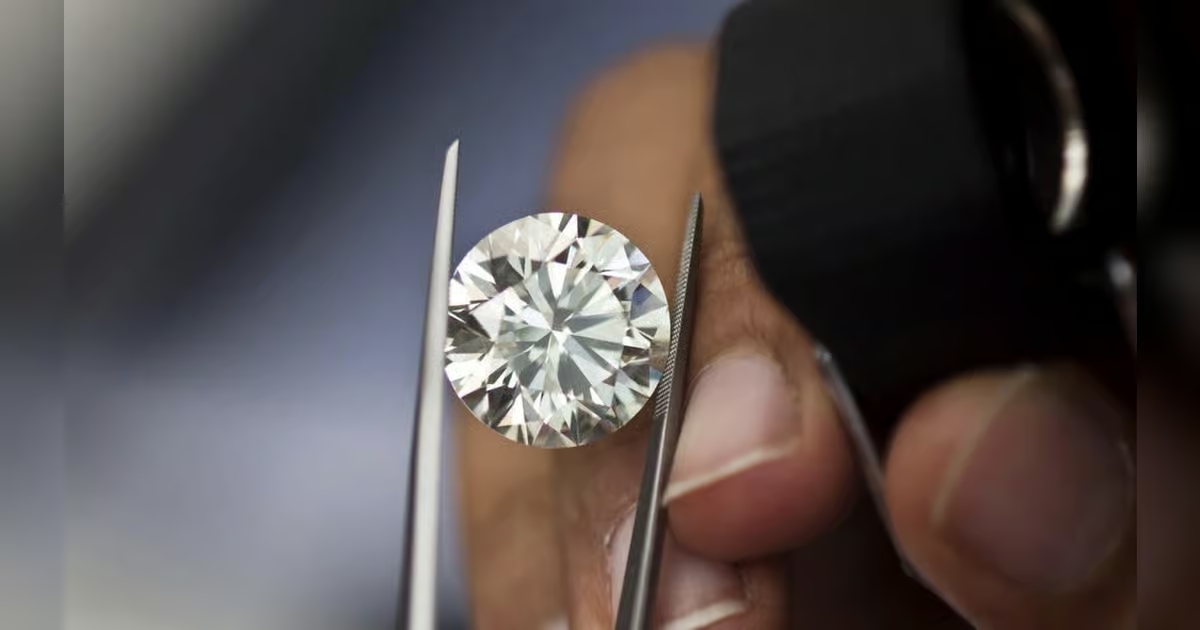
Lab-grown diamonds are changing global market dynamics as the natural diamond industry faces weaker demand and declining production, DMCC’s executive chairman and chief executive officer Ahmed Bin Sulayem said.
Speaking at the Dubai Diamond Conference on Monday, Bin Sulayem said lab-grown diamonds accounted for 61 per cent of purchases by units in the US in 2025, up from just 2 per cent in 2017.
At the same time, natural diamond producers are facing pressure from shifting consumer preferences and a contraction in global supply, he said.
“Lab-grown diamonds are a clear consumer choice, and a distinct commercial category. Natural diamonds are finite, geologically rare, and tied to deep socio-economic development. Both sectors deserve objective, fact-based market analysis,” he said.
Stay up to date with the latest news. Follow KT on WhatsApp Channels.
The conference, hosted by the Dubai Multi Commodities Centre (DMCC), focused on reviving demand for natural diamond jewellery and creating new value for the industry.
Bin Sulayem added that the industry needed to highlight the rarity, heritage and origin of natural diamonds as younger consumers increasingly turn to alternatives. For consumers who do not place importance on a diamond’s age or rarity, lab-grown alternatives offer a compelling choice, he said.
Pressure on diamond producers
The industry is also facing a decline in natural diamond production as major mining operations close or scale back output, Bin Sulayem said.
He said producing countries needed to focus on capturing higher value per carat, verifying the origin of their diamonds and supporting the economic resilience of mining communities.
“Verifiable origin ensures that diamonds from specific points of origin command the premium prices they deserve in the open market,” he said.
Bin Sulayem cited Namibia as an example, saying its diamond deposits and partnerships with local communities had helped the country command higher value on global trading platforms.
He also called for greater use of technology to reduce extraction costs and protect profit margins as the industry faces pressure from weaker demand.
For producing countries, including several across Africa, diamonds remain an important source of government revenue, foreign exchange and employment. A contraction in the trade can therefore have immediate economic consequences, he said.
Dubai’s diamond trade
Dubai recorded a record $41.7 billion in diamond trade in 2025, with natural diamonds accounting for 95.8 per cent of the total, according to figures cited by Bin Sulayem.
The emirate has also expanded its role in polished diamond trading, with the total value of polished diamond trade increasing 246 per cent since 2020.
DMCC is home to almost 1,400 diamond and precious stone companies, while the Dubai Diamond Exchange hosted more than 100 tenders and auctions in 2025, Bin Sulayem said.
Lab-grown diamond wholesale prices have fallen 93 per cent since 2020, averaging around $100 per carat, according to De Beers’ June 2026 Diamond Report. The decline reflects rising supply and competition, making lab-grown diamonds more affordable for consumers and adding to the pressure on the natural diamond industry.
Source: Khaleej Times