

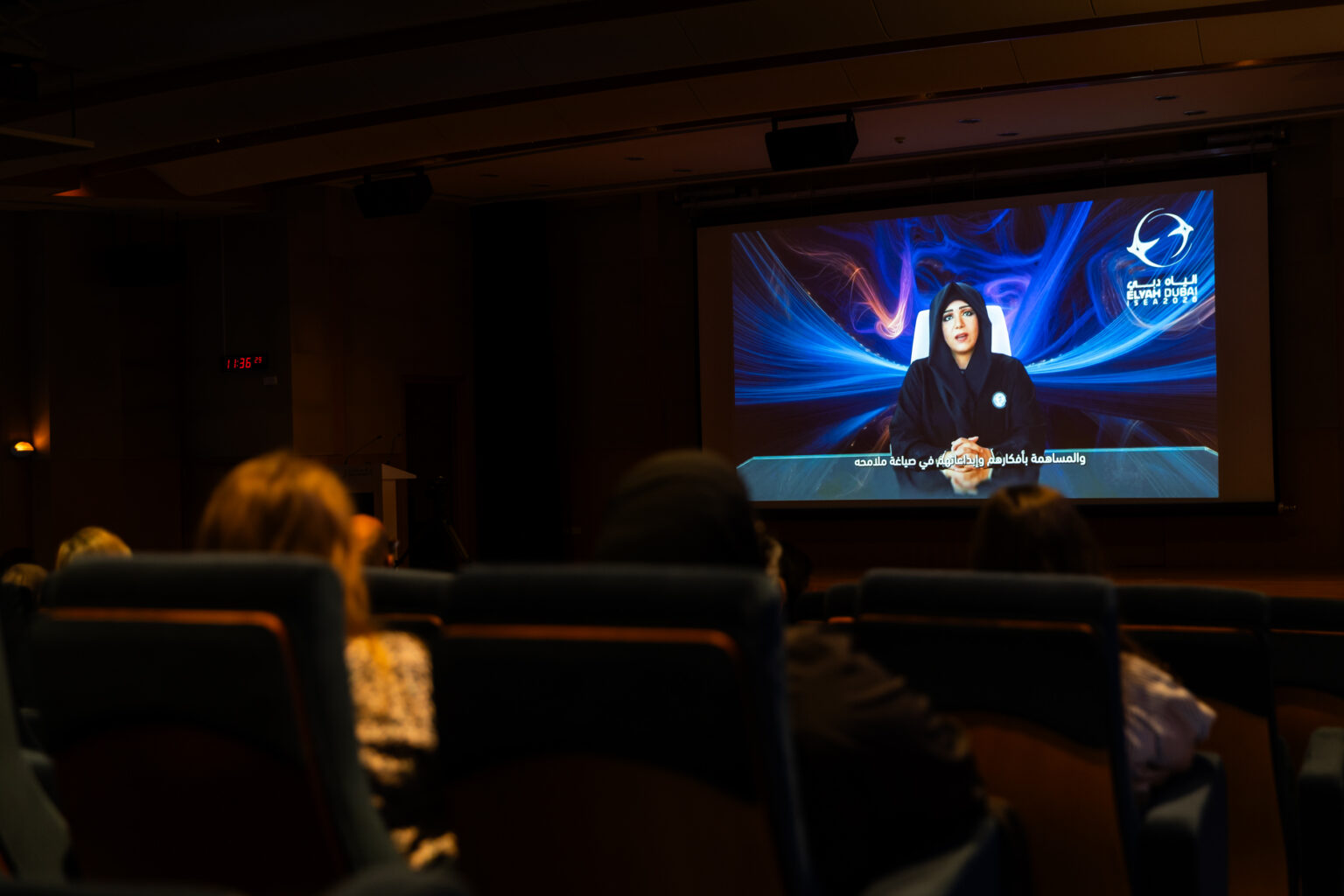
DUBAI, 10th November, 2026 (WAM) — The 31st International Symposium on Electronic/Emerging Art (ISEA2026 Dubai) opened the core sessions of its Online Academic Programme today, bringing together artists, researchers, innovators and specialists from around the world.
Organised by Dubai Culture and Arts Authority (Dubai Culture) in partnership with Zayed University under the theme ‘ELYAH: Constellating Place, Data, and Identity’, the symposium explores the intersection of art, science and technology and their role in expanding creative expression and promoting cultural dialogue and understanding.
The event supports Dubai Culture’s efforts to advance the digital and emerging arts ecosystem, support creative talent and create opportunities for learning, research and experimentation. These efforts reinforce Dubai’s position as a global cultural reference, a leader in innovation, a driver of the creative economy, and rooted in Emirati heritage.
In her welcome address, H.H. Sheikha Latifa bint Mohammed bin Rashid Al Maktoum, Chairperson of Dubai Culture and Arts Authority, said, “Dubai’s hosting of ISEA2026 invites an international conversation about art and technology to a country where cultural ambition and future thinking are closely connected.”
Sheikha Latifa added, “Every place becomes part of us through the people we meet, the stories we hear and the experiences we carry forward. Art gives us ways to explore those connections and share what they mean.”
H.H. Sheikha Latifa welcomed the artists, creators, researchers, thinkers and students participating in the programme in person and online, highlighting the importance of bringing together diverse perspectives and experiences.
She affirmed that the UAE views investment in culture as an investment in people’s creativity, potential and ability to shape a better future.
Reflecting on the importance of cultural identity, H.H. Sheikha Latifa said, “Our heritage gives us a sense of continuity, while our openness to the world allows that heritage to inspire new forms of expression and understanding.”
Her Highness added: “As technology expands what humanity can achieve, the choices we make will shape how our cultures are understood, whose voices are heard and what future generations come to value. For Dubai and the UAE, this places culture at the centre of our responsibility to the future, guiding progress with a clear sense of identity, purpose and care for humanity.”
Addressing the implications of emerging technologies, H.H. Sheikha Latifa said, “Artificial intelligence and emerging technologies are changing how we produce knowledge and encounter cultures, carrying implications for identity and how people see themselves represented in the world.” She noted: “It is our responsibility to ensure that human dignity, cultural diversity, and creative freedom guide this transformation.”
She added, “We must equip future generations with the knowledge, access and creative confidence they need to shape their own future; and sustained investment in education, culture and talent is essential to that responsibility.”
On cultural exchange, Her Highness said: “By bringing different experiences into dialogue, the UAE strengthens its relationships with the world, deepening mutual understanding and building bridges that reflect the richness of our societies.”
H.H. Sheikha Latifa added, “Today’s young people will inherit the cultural and technological choices we make; they deserve the opportunity to understand their roots, exercise their judgement and contribute their own ideas with confidence.”
Concluding her address, H.H. Sheikha Latifa said, “As you begin your conversations, I invite you to consider what our decisions today will make possible for them. May the knowledge shared here help us build a future in which people feel connected to their heritage, open to one another and empowered to create.”
In her opening address, Hala Badri, Director-General of Dubai Culture, said, “For over three decades, ISEA has brought together people who see possibilities where others see boundaries. People who experiment with new tools, question familiar approaches and discover new forms of artistic expression.”
She said, “Under the theme ‘ELYAH: Constellating Place, Data, and Identity,’ ISEA2026 brings together an international community working at the intersection of art, science and technology.” She added: “More than 1,000 submissions to the Artistic and Academic Programme have contributed to a remarkable exchange of creative thinking, with over 100 artworks and installations selected to be presented across Dubai. Through immersive experiences, digital installations and experimental artistic practices, audiences will discover new ways of engaging with creativity.”
On the academic programme, Badri said, “Meanwhile, the online Academic Programme will connect artists, academics and researchers across borders, creating space for critical enquiry, knowledge exchange and fresh perspectives.”
Her Excellency highlighted the significance of the gathering, noting that its value lies not only in its scale but also in the opportunities it creates.
“An unexpected conversation between sessions. A collaboration between practitioners working in entirely different fields. An experiment that begins here and finds its way into a studio, laboratory or creative space somewhere else in the world. These are the encounters that can change the direction of a creative practice,” she said.
“For Emirati and regional practitioners, ISEA opens valuable opportunities to exchange expertise, present their perspectives and build connections with an international community,” Badri added.
The programme also featured addresses exploring the future of digital and emerging arts and the role of technology in artistic practice.
Prof. Kevin Hall, President and CEO of Zayed University, highlighted the importance of collaboration between art, science and technology in driving innovation, as well as the role of universities in preparing students to navigate digital transformation and shape the future.
He emphasised the need for higher education institutions to nurture imagination alongside technical expertise, equipping future generations with creativity, critical thinking and ethical awareness.
Erandy Vergara, Chair of the ISEA International Board, also delivered an address, highlighting the symposium’s vibrant artistic and academic community, its innovative artworks and the diverse perspectives shared by artists and researchers.
She also drew attention to the diversity of the Artistic Programme, hosted across several cultural venues in Dubai, which offers audiences opportunities to engage with a wide range of artistic experiences.
Maitha Ali Al Blooshi, Director of the Emerging Arts Department at Dubai Culture and Executive and Strategic Director of ISEA2026 Dubai, encouraged participants to explore the symposium’s artistic experiences, engage with artists and exchange ideas.
She highlighted the lasting value of the ideas, perspectives and connections participants take away from the event.
Prof. Janet Bellotto, Dean of the College of Arts and Creative Enterprises at Zayed University and Executive and Strategic Director of ISEA2026, also delivered an address on the responsibility of academic and creative institutions to keep pace with rapid developments in artificial intelligence.
She emphasised the importance of adopting emerging technologies ethically and sustainably to help shape a future that balances technological progress with social responsibility.
The programme featured a keynote presentation by Katherine Hayles titled ‘AI as Artistic Collaborator: Mapping a Theory of Mind for Large Language Models,’ which explored the role of artificial intelligence in artistic practice and the possibilities for interaction between creative practitioners and large language models.
The core sessions of the Online Academic Programme explore four themes: Celestial Dialogues, Charting Constellations, Eco-Tech Futures and Starlinked Worlds. Together, they examine the connections between place, memory, identity and emerging technologies, alongside environmental responsibility and the future of human interaction in the digital world.
As part of the programme, Auronda Scalera and Alfredo Cramerotti will explore artistic practices in the digital age during the session ‘From Cosmos to Quanta: Curation in the Digital Era,’ moderated by Esra Ozkan, ISEA2026 Producer. Lisa Moren will present ‘The Polar Ice Museum.’
Under the theme of Celestial Dialogues, Yueshen Wu will present ‘Toward an Intercultural Embodied Experience: Sonifying Ballet Movements Through Guzheng Playing,’ co-authored with Yuting Xue and Elke Reinhuber.
Wu will explore how machine learning can transform ballet movements into evolving sound textures, accompanied by visuals inspired by Chinese ink-wash painting.
Anna Shvets will also examine the potential of artificial intelligence to facilitate artistic exchange across cultures in ‘Across Cultures and Algorithms: AI-Mediated Intercultural Dialogue Through the AI Hokusai ArtTech Research Project.’
Within Eco-Tech Futures, Dr Predrag K. Nikolić will present ‘Reimagining the Invisible: AI Reconstructing Borneo’s Sensory Heritage and Ecological Losses,’ exploring how emerging technologies can reinterpret ecological memory and sensory experiences at risk of disappearing.
Paloma González Díaz will also examine the environmental impact of digital technologies and the role of art in encouraging more sustainable practices during ‘Infrastructures, Energy and Algorithms: Critical Artistic Practices on AI.’
Under Starlinked Worlds, the programme includes ‘Exploring Musical Creativity in Microgravity: Insights from a Parabolic Flight Experiment,’ by Leonardo Barilaro and Laura Alice Bracken, investigating how changing gravity conditions influence musical performance.
Chris Elvis Leisi and Florian Christoph Bruggisser will also present ‘Doppelgänger:Apparatus – Encountering Uncanny Doppelgängers in a Shared Mixed Reality Space,’ an experience that allows participants to interact with autonomous digital representations of themselves, co-authored with Christopher Lloyd Salter.
The session ‘ISEA2026 is in Dubai,’ hosted at Dubai International Financial Centre (DIFC), will explore how the international symposium was brought to the city and how its in-person Artistic Programme and Online Academic Programme were developed.
The discussion will feature Janet Bellotto alongside members of the curatorial team, including Jalal Luqman, Anna Seaman, Nada Altaher, Giuseppe Moscatello and Nasir Abdullah, as well as artist Sabrina Guechetouli.
Participants will discuss opportunities for collaboration between the UAE’s creative community and international artists and researchers, highlighting the importance of knowledge exchange and artistic experimentation.
The sessions and artistic experiences reflect the breadth of research and experimentation at ISEA2026, demonstrating how emerging technologies can expand artistic expression and help address cultural, environmental and human challenges.
Source: Emirates News Agency