

The author is president of UAE Safety and Emergency Security Association and professor of sustainable development at the American University of Sharjah. He is a former UAE Minister of Climate Change and Environment and former Minister of Infrastructure. He authored two books on climate change that influenced academic and international reforms.
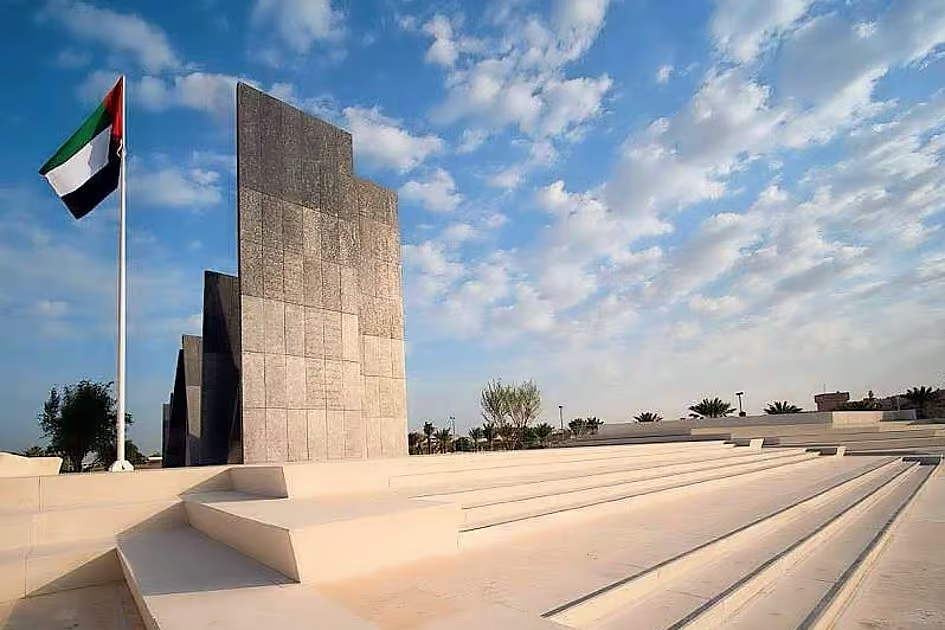
On Commemoration Day, we honour those who made the ultimate sacrifice for the UAE and reflect on the values their courage embodies: loyalty, belonging and responsibility.
UAE President Sheikh Mohamed bin Zayed Al Nahyan has affirmed the sacrifices of the nation’s martyrs will remain an enduring source of inspiration for patriotism and loyalty, linking their legacy to the responsibility of new generations to continue building, advancing and serving the nation.
Sheikh Mohammed bin Rashid Al Maktoum, Vice President, Prime Minister and Ruler of Dubai, also described memory as “the vessel of history”, cautioning when memory is lost, heritage fades, identity weakens and the future becomes more uncertain. He emphasised that Commemoration Day is more than an annual occasion but a living memory connecting generations of Emiratis.
I found myself reflecting deeply on these words. On Commemoration Day, we remember names and sacrifices, and the men who gave their most precious possession for their country. But memory should not simply be a return to the past. It is also, I believe, a responsibility towards the future.
This raises a question we perhaps do not ask often enough when discussing sustainability: What do we want to remain of us in the memory of future generations?
We have become accustomed to associating sustainability with water, energy, food, the environment and natural resources. We ask what we will leave to future generations, whether we are consuming more than we should today, and how we can preserve resources for those who come after us.
These are essential questions. But human beings do not live by water, energy and food alone, just as nations cannot endure through resources, economies and infrastructure alone. We need to broaden our understanding of sustainability. Seen in this way, Commemoration Day becomes more than a day for remembering the past. It becomes a day for sustaining national memory.
When we remember the martyrs, we are not merely preserving their names. We preserve the values they embodied: loyalty, belonging, responsibility, service and the willingness to give what is most precious when the nation calls.
This brings me to Ibn Khaldun. Centuries ago, Ibn Khaldun sought to understand why civilisations rise, why they grow strong and why the forces of decline emerge from within them. What matters today is not to impose the language of our age upon his, but to recognise the larger insight in his thought: civilisation is not simply stone, wealth and resources. It is also people, society, knowledge, human bonds and values that make development, and its continuity, possible.
From this comes an important contemporary lesson: Civilisation is not only what we build. It is also what enables the generations after us to continue building.
This is where the sustainability of knowledge meets the sustainability of memory. Knowledge is not merely information stored in a book, archive or database. Civilisational knowledge goes deeper. It means that a nation preserves its experience, understands it and passes its meaning to the next generation.
A document preserves the event. Memory preserves its meaning. That distinction is crucial. Here, the words of the UAE leadership acquire a deeper significance. Connecting Commemoration Day with continuity between generations means moving from remembering an event to sustaining its meaning.
Honouring a martyr, therefore, does not end with remembering the sacrifice. It also requires preserving the value behind it. The forms of giving need not remain the same. Every generation has its own duties and challenges. Answering the nation’s call today is also expressed through building, knowledge and progress towards a more prosperous future, inspired by the values embodied by those who sacrificed before us.
This is the essence of sustaining values: the value remains constant even as the way we express it evolves.
Service may mean defending the nation. But it can also mean knowledge that builds its future, research produced at a university, innovation that strengthens its competitiveness, excellence in one’s profession, or simply fulfilling one’s responsibilities with integrity.
Memory, then, does not have to remain captive to the past. It can become an energy for the future. For this reason, I believe our understanding of sustainability needs an additional dimension alongside resources, the economy and the environment: the sustainability of civilisational memory.
Memory preserves experience. Knowledge interprets it. Values give it meaning. And generations transform that meaning into new action.
If this chain is broken, buildings, roads and institutions may remain, but something deeper begins to diminish: a society’s knowledge of itself.
Perhaps this is among the most profound meanings of Commemoration Day. We do not look backwards alone. We look towards the future through memory.
We remember those who gave to the nation so that those who come after them understand that the country they inherit did not begin with them. What they inherit is the outcome of generations of patience, work, building, giving and sacrifice.
Nations are not sustained by resources alone. They endure when they preserve their memory, transmit their knowledge and renew their values, and when each generation understands that the nation it inherits is not its possession alone. It is a trust to be passed on.
Perhaps this is the deepest form of fidelity to our martyrs: that their sacrifices do not remain merely a memory in history, but endure as a living value that shapes the future and sustains the achievements of the nation.
Source: Khaleej Times