

AL AIN, 1st November, 2026 (WAM) — Al Ain Zoo has strengthened its position as a specialised scientific institution through applied research and international partnerships supporting the UAE’s efforts to protect wildlife, conserve biodiversity and advance environmental sustainability at regional and global levels.
Founded in 1968 by the late Sheikh Zayed bin Sultan Al Nahyan, the zoo houses more than 4,000 animals and conducts research focusing on species native to the desert and semi-desert environments of the Arabian Peninsula and Northeast Africa.
Among its key initiatives is a genetic studies programme that uses DNA analysis to identify and classify animals, maintain genetic diversity and inform animal exchanges with international institutions participating in species conservation programmes.
The zoo also conducts research on endangered species, biodiversity within its facilities, and animal biology and behaviour to document native species, raise scientific awareness of the UAE’s environment and improve breeding programmes and sustainable wildlife management.
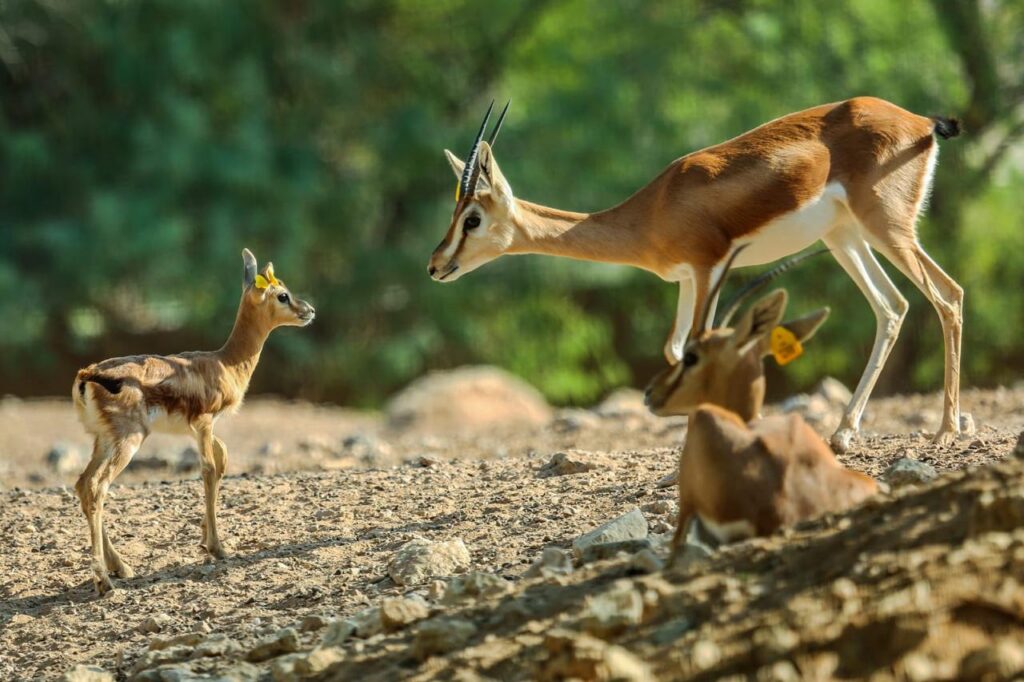
Al Ain Zoo played a significant role in developing the Dama Gazelle Conservation Strategy 2019–2028, in cooperation with the International Union for Conservation of Nature (IUCN) and international partners. It has become one of the world’s largest breeding centres for the critically endangered species, supporting efforts to reintroduce it into its natural habitat.
The zoo has also made significant advances in Arabian oryx conservation. Housing more than 300 animals, it has conducted comprehensive genetic analysis of its herds to improve genetic management and breeding programmes, while supporting reintroduction projects within the UAE and abroad.
Its Arabian sand cat population contributes to conservation breeding, scientific research and the management of populations outside their natural habitats.
Research activities also cover migratory birds and rare butterflies, alongside a seed bank containing dozens of native plant species to support ecosystem sustainability and biodiversity conservation.
The zoo employs advanced technologies, including the Zoological Information Management System (ZIMS), which provides integrated health, genetic and behavioural data to support evidence-based decisions by researchers and veterinarians. Modern veterinary care and behavioural rehabilitation techniques further support animal management.
Its scientific partnerships include cooperation with the Royal Zoological Society of Scotland (RZSS), particularly on genetic research involving Arabian sand cats and other endangered species.
Through its research programmes and international partnerships, Al Ain Zoo has established itself as a leading regional wildlife research institution, contributing to scientific knowledge and global efforts to protect endangered species and preserve biodiversity for future generations.
Source: Emirates News Agency