

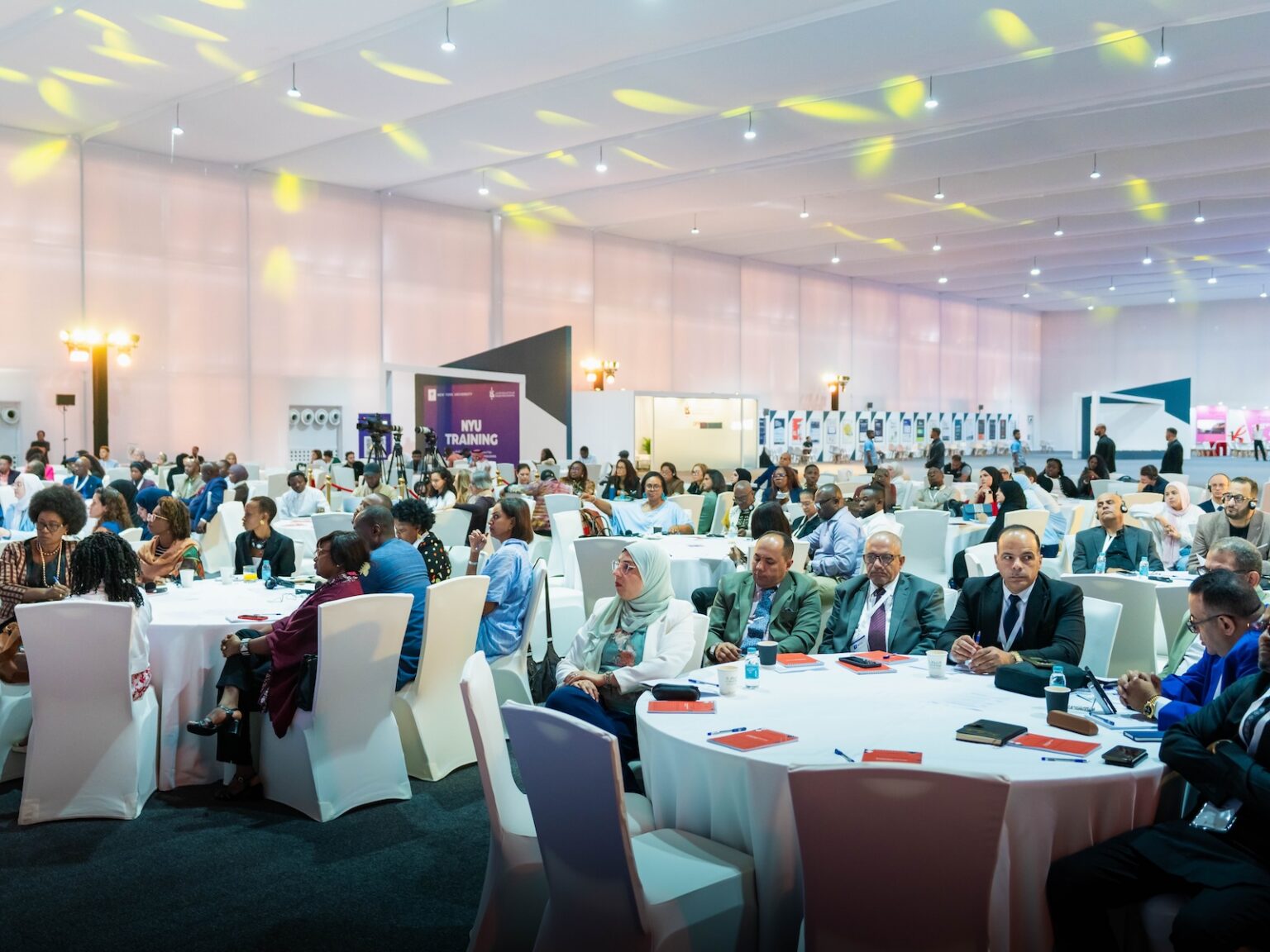
SHARJAH, 31st October, 2026 (WAM) — International and regional publishing experts have identified opportunities for publishers to expand the reach of Arabic content, grow their audiobook businesses and attract new audiences at the 15th edition of the Sharjah NYU SPS Executive Publishing Programme, held, on Saturday, at Expo Centre Sharjah.
Organised by the Sharjah Book Authority (SBA) in collaboration with the Centre for Publishing, Writing, and Media at the NYU School of Professional Studies (SPS), the programme brought together 200 publishers, for sessions led by 7 speakers focusing on key areas, including audio publishing, video and social media marketing, international translation, and cultural content exchange.
Held under the theme ‘Seeking New Audiences: Connecting and Communicating on an International Scale’, the programme combined international expertise with regional perspectives, case studies and practical workshops.
During his keynote, Mansour Al-Hassani, Director of Publishing Services at SBA, emphasised the importance of equipping publishers with the skills to adapt to industry changes.
He said: “Publishing today extends beyond producing books and delivering them to readers. It encompasses content development, rights management, marketing and international expansion. As reading habits evolve, publishers must embrace new tools and approaches to strengthen their competitiveness.”
Al-Hassani added: “Through our collaboration with the NYU School of Professional Studies, we combine academic expertise with industry practice to equip publishers with practical knowledge they can apply to their businesses, while encouraging the exchange of ideas, professional collaboration and new growth opportunities.”
For her part, Andrea Chambers, Associate Dean of the NYU SPS Center for Publishing, Writing, and Media welcomed the publishers and speakers during her keynote, highlighting the programme’s agenda and its relevance to the rapidly evolving global publishing industry.
The programme opened with ‘Connecting with Listeners: Audio Goes Global’, a virtual session led by Iria Alvarez, Vice President of Global Audio Strategy at Penguin Random House, exploring the growth of audiobooks and opportunities for publishers to reach international audiences.
Alvarez said: “The Arab world has significant potential to develop its audiobook market, drawing lessons from Brazil and Spanish-speaking countries. Arabic is spoken across diverse cultures, each with distinct preferences and accents. Publishers can build on this diversity by developing content for local audiences, securing audio rights early, expanding catalogues and investing in quality narration. Artificial intelligence can improve efficiency, but compelling storytelling and understanding listeners’ needs remain essential.”
The day’s discussions continued with ‘Connecting with Listeners: Audio Goes Regional’, presented by Ali Abdel-Moneim, CEO of Arabookverse, and Ahmed Rewihel, the company’s COO.
Abdel-Moneim highlighted the regional market’s untapped potential, noting that only 14,000 Arabic audiobook titles are available to around 470 million Arabic speakers. He said: “Audiobooks are reaching new audiences, with around 70% of listeners previously unfamiliar with reading as a habit.
The Arabic audiobook market grew by 165% in 2025, reflecting rising demand. Publishers must recognise the differences between regional markets, invest in quality narration and develop content that reflects local preferences.”
Rewihel added: “The Gulf region generates 61% of audiobook revenue but accounts for just 26% of listening, while Egypt, North Africa and the Levant account for 54% of consumption but only 24% of revenue.
Understanding these differences is essential. With international platforms expanding in the region, publishers have an opportunity to revive existing titles through audio, reach new audiences and explore audio-first publishing.”
Providing a regional perspective, Tamer Said, Director of the Sharjah Literary Agency, presented ‘Sharing Your Cultural Assets: A Regional Perspective’, exploring opportunities to take Arabic content to international markets.
He said: “Bringing Arabic literature to international audiences does not mean changing its identity. The unique cultural context is precisely what makes it valuable. Covers, marketing and positioning may need to be adapted to the needs of different markets, but the stories must retain what makes them distinctive. Our goal is not to make Arabic stories less local, but to help them reach more readers worldwide.”
In a virtual session titled ‘Sharing Your Cultural Assets with the World’, global literary scout Kelly Farber explored how publishers can reach international audiences through rights licensing, translation, literary agents, book fairs and distribution partnerships, including opportunities in film and streaming.
Lauren Hesse, Senior Director of Social Media at Little, Brown and Company, part of Hachette Book Group US, led ‘Social Video: How to Turn Awareness into Sales’, examining how publishers can use YouTube, TikTok and video marketing to engage readers, promote books and drive sales.
The programme concluded with ‘The Impact of AI on Manuscript Evaluation: What Publishers Need to Know’, led by Dr Mahmoud Al-Rajabi, Chair of the Department of Journalism and Digital Media and Associate Professor of Digital Media at East University in Jordan. The session covered AI-assisted manuscript assessment, prompt development, evaluation reports and the limitations of AI in editorial decision-making.
Source: Emirates News Agency