

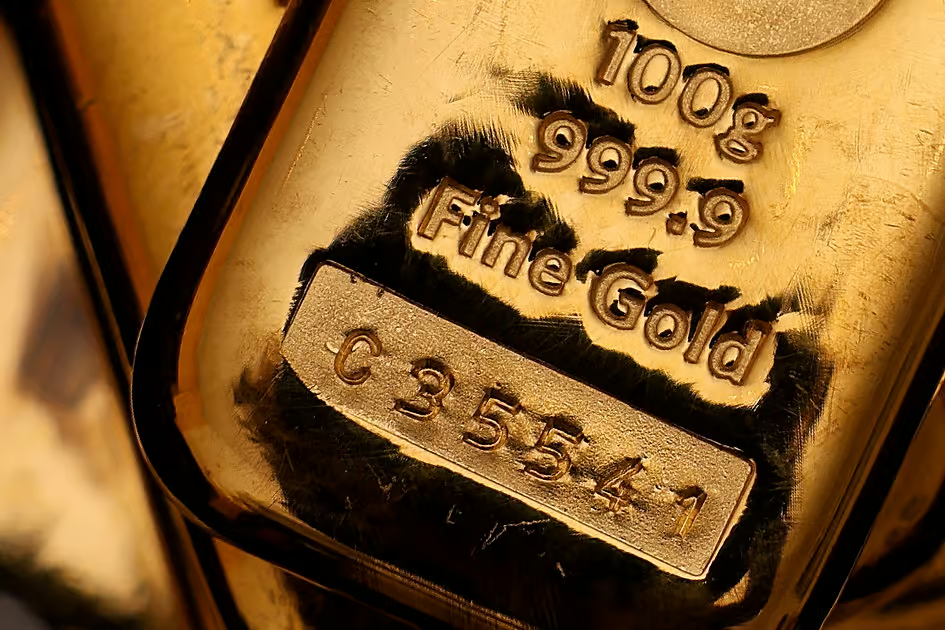
Gold remains under pressure after slipping to its lowest level in more than a year, with investors dumping positions amid expectations of higher US interest rates and a stronger dollar. However, market analysts believe the recent selloff could prove temporary if inflation eases and the US Federal Reserve adopts a less aggressive stance.
The precious metal has fallen towards $3,700 an ounce, weighed down by elevated Treasury yields and growing expectations that US policymakers may keep tightening monetary policy. According to Daniela Hathorn, senior market analyst at Capital.com, gold’s latest decline reflects investors’ preference for assets offering higher returns.
“Gold has extended its recent decline towards $3,700 per ounce, reaching its lowest levels in over a year as persistent dollar strength and elevated Treasury yields continue to undermine demand for the non-yielding metal,” she said.
The decline has come despite heightened uncertainty in equity markets, where concerns over technology valuations and earnings sustainability have triggered a broader selloff. Traditionally viewed as a safe-haven asset, gold has so far failed to attract significant defensive flows.
Hathorn noted that the biggest challenge remains the sharp repricing of US interest rate expectations after stronger-than-expected inflation data. Markets are now pricing in the possibility of additional Federal Reserve rate hikes, boosting bond yields and the US dollar while raising the opportunity cost of holding bullion.
The pressure is not limited to gold. Silver has dropped about 7% this week, while copper and aluminium have also recorded sharp losses, suggesting investor flows rather than underlying fundamentals are driving markets.
Speaking on the broader metals selloff, Carsten Menke, Head of Next Generation Research at Julius Baer, said speculative traders and trend-following investors have been exiting positions on fears of further Fed tightening.
“Flows are dominating fundamentals in the industrial and precious metal markets, putting broad-based pressure on prices since the start of the week,” Menke said.
“Speculative traders and trend followers in the futures markets appear to be parting with their positions as they fear further interest rate increases by the US Federal Reserve and an even stronger US dollar.”
Despite the near-term weakness, Menke remains constructive on gold. He expects inflationary pressure in the US to soften as energy prices ease, reducing the need for aggressive monetary tightening.
“Our view on US monetary policy remains unchanged. Inflationary pressure in the US should soften on the back of easing energy prices, allowing the Federal Reserve to be less aggressive than currently expected,” he said.
The longer-term outlook for gold also remains supported by central bank buying, geopolitical risks and concerns over US fiscal sustainability, according to Hathorn. However, she cautioned that these factors may struggle to outweigh restrictive monetary policy in the short term.
Technical indicators suggest selling pressure may be becoming stretched. Gold’s daily relative strength index has fallen close to oversold levels, raising the likelihood of a short-term rebound if economic data begin pointing to slower inflation and lower real yields.
For now, analysts say the direction of US interest rates and the dollar will remain the key drivers for gold, with any signs of softer inflation likely to determine whether the metal can finally find a floor after its recent slide.
Source: Khaleej Times