

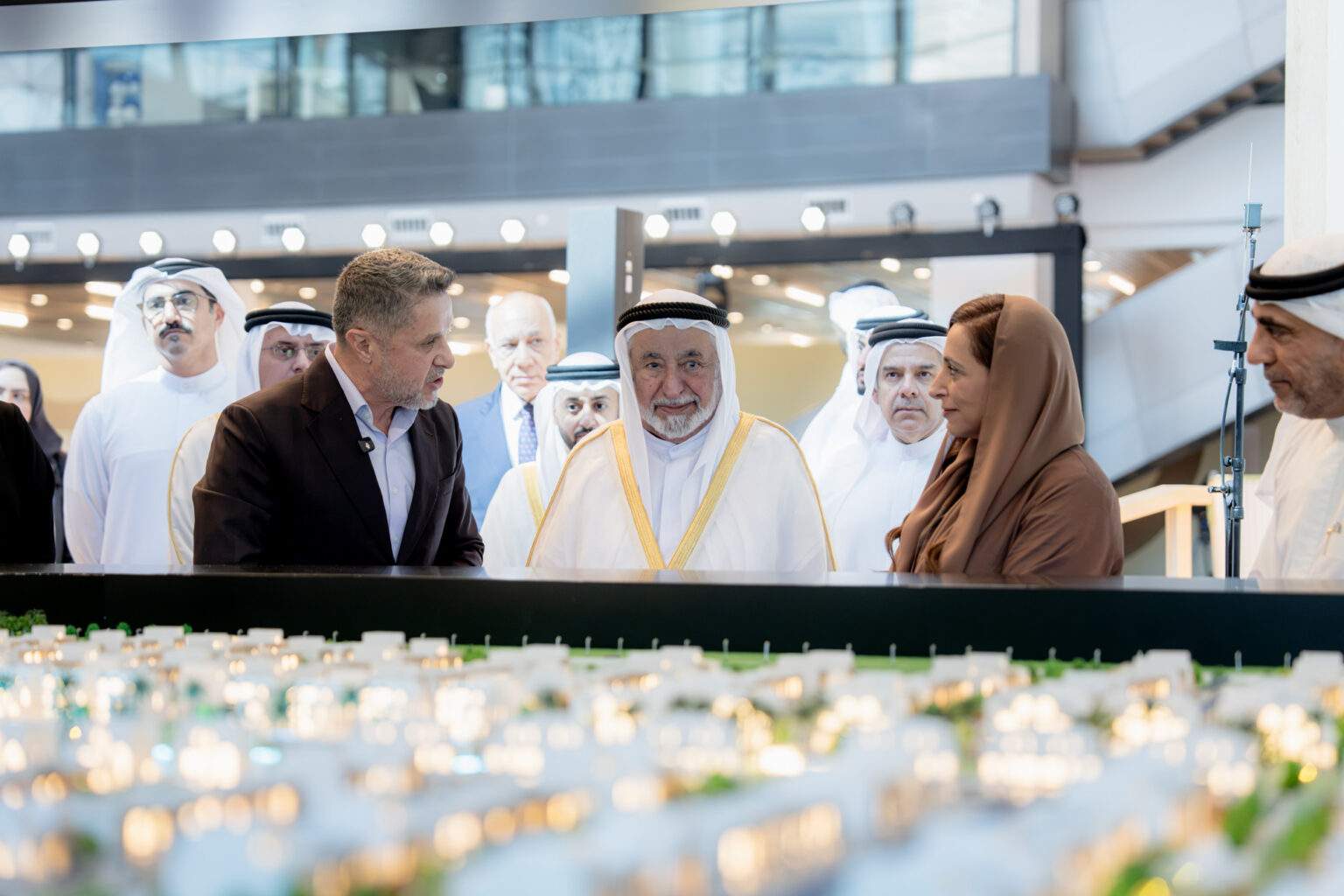
SHARJAH, 28th October, 2026 (WAM) — H.H. Sheikh Dr Sultan bin Mohammed Al Qasimi, Supreme Council Member and Ruler of Sharjah, witnessed, on Wednesday morning in the presence of H.H. Sheikha Bodour bint Sultan Al Qasimi, Chairperson of the Sharjah Research, Technology and Innovation Park (SPARK), the launch of the second edition of Sharjah Next. The forum features keynote speeches, panel discussions, workshops and specialised debates exploring sectors shaping the future of economies and societies. H.H. Sheikh Dr Sultan also inaugurated Uruk City, a pioneering model for a new generation of sustainable cities.
Organised by the Sharjah Research, Technology and Innovation Park (SPARK), the two-day forum is themed “Sustainability” and carries the slogan “From Lab to Market”. It aims to strengthen collaboration among researchers, industry sectors and investors, and to accelerate the transition of innovations from research and development to practical applications and commercialisation.
During the ceremony at the Sharjah Research, Technology and Innovation Park (SPARK), H.H. the Ruler of Sharjah tapped a tablet to inaugurate Uruk City. He then watched a film outlining the city’s vision as a new concept for the future of urban living, built on harnessing technology and innovation to optimise resources and save time, giving people greater opportunities to enjoy healthier and more prosperous lives. The city also redefines the role of urban environments in serving their residents and communities, while aspiring to become a hub for scientific research and innovation and a platform for developing, testing and implementing future solutions in a real-world urban setting.
H.H. Sheikh Dr Sultan reviewed the model of Uruk City, an integrated environment where knowledge, scientific research and practical application converge, thereby strengthening Sharjah’s position as a hub for innovation and reinforcing the UAE’s role in shaping the future of cities worldwide.
The ceremony opened with a video highlighting the importance of investing in creative ideas, nurturing and developing them, and creating a supportive environment that enables them to grow and evolve into distinctive initiatives and projects with a positive impact. Hussain Al Mahmoudi, CEO of Sharjah Research, Technology and Innovation Park (SPARK), then delivered a speech reviewing the Park’s 10-year journey. He affirmed that this journey began with the vision of H.H. the Ruler of Sharjah to build an integrated ecosystem that transforms knowledge into innovation and scientific research into economic and social value by fostering integration among universities, the industrial sector and entrepreneurship.
Al Mahmoudi explained that this vision has been translated into tangible achievements, strengthening Sharjah’s position as a hub for research, development and innovation. The ecosystem has attracted more than 13,000 companies, created 10,000 jobs and drawn over AED 500 million in research investment. He also highlighted the launch of pioneering projects in sustainability, water technologies, future mobility, healthcare, advanced manufacturing and industrial design, alongside the expansion of international partnerships and stronger cooperation with research and scientific institutions.
The CEO of Sharjah Research, Technology and Innovation Park (SPARK) noted that the ecosystem has entered a new phase under the leadership of H.H. Sheikha Bodour bint Sultan Al Qasimi, Chairperson of SPARK, which aims to ensure the sustainability of innovation and strengthen integration among academia, industry and entrepreneurship. A key feature of this phase is the “Uruk 2.0” project, which aims to develop an advanced environment for testing artificial intelligence and sustainability technologies, particularly in water, agriculture and smart cities. The project also seeks to support intellectual property protection, commercialise scientific research outputs, and transform them into innovations and projects with economic and social value.
Al Mahmoudi concluded his speech by calling on partners across the government, private and academic sectors, locally, regionally and internationally, to continue collaborating and to contribute to building the next phase. He affirmed that the achievements of the first decade provide a solid foundation for further progress. He also expressed his gratitude to the Board of Directors, employees, partners across the innovation ecosystem, and the forum’s sponsors and supporters, commending their role in advancing development and reinforcing the drive towards a more sustainable and innovative future.
Her Excellency Dr Amna bint Abdullah Al Dahak Al Shamsi, Minister of Climate Change and Environment, delivered a speech in which she praised H.H. the Ruler of Sharjah’s vision of making knowledge the foundation for developing people, preserving identity and achieving sustainable development. She noted that this vision extends beyond supporting culture and science to strengthening food security and ensuring the sound management of resources. She added that the wheat cultivation project in Mleiha embodies the link between knowledge and the land, drawing its name, “Saba Sanabel”, from the Quranic verse: “The example of those who spend their wealth in the way of Allah is that of a grain that sprouts into seven ears.” This reflects the multiplication of the impact of giving and reinforces the principles of development and sustainability.
Al Shamsi explained that the Emirate of Sharjah offers an integrated sustainability model through pioneering initiatives and projects, including BEEAH’s work in materials recycling and waste-to-energy conversion, and Sharjah Sustainable City’s use of energy and water solutions. She also highlighted the role of universities and research institutions in empowering innovators and translating knowledge into practical applications. She affirmed that this approach aligns with the UAE’s national priorities under the leadership of President His Highness Sheikh Mohamed bin Zayed Al Nahyan, and with the vision of His Highness Sheikh Mohammed bin Rashid Al Maktoum, Vice President, Prime Minister and Ruler of Dubai. These priorities include achieving climate neutrality by 2050, enhancing resource efficiency, developing food production, advancing the circular economy, and building communities that are more resilient to climate change.
The Minister of Climate Change and Environment added that the UAE continues to support global climate action by increasing climate finance, expanding access to technology and knowledge, and building capacity, particularly in developing countries and in communities most affected by climate change. She noted that the launch of ALTÉRRA, the climate investment fund, at COP28, backed by a UAE commitment of USD 30 billion, reflects the country’s approach to mobilising climate investment. She stressed the importance of ensuring that the transition to sustainability is inclusive and creates opportunities for farmers, young people and communities, thereby contributing to greater productivity, resilience and prosperity for all.
Al Shamsi affirmed that the forum’s slogan, “From Lab to Market”, underscores the need to translate research and innovation into practical, scalable solutions. She noted SPARK’s role in linking knowledge to market needs, and the importance of partnerships with the Sharjah Entrepreneurship Centre (Sheraa) through the National Agricultural Centre and the Agribusiness Entrepreneurship Programme “AgriPost” to support start-ups and develop their solutions. She also highlighted the launch of “Tahweel”, established through a strategic partnership between the Ministry of Climate Change and Environment and BEEAH, as the UAE’s first integrated national digital marketplace for trading recyclable materials. She affirmed the UAE’s ambition to expand partnerships that strengthen local production and make sustainable solutions economically viable and accessible to all, supporting development while safeguarding resources for future generations.
Khalid Al Huraimel, CEO and Vice Chairman of BEEAH, also delivered a speech, saying: “When BEEAH was established in 2007, guided by the vision and support of H.H. the Ruler of Sharjah, our goal was to find better solutions for waste management and to preserve resources for future generations. Our ambition extended beyond addressing environmental challenges; we sought to turn them into opportunities for development and innovation. We drew on global experiences to build an integrated system for waste management and resource recovery. Today, Sharjah has successfully diverted 93% of its waste from landfills and is home to the region’s first waste-to-energy plant. This marks a transition from learning from others to attracting them to benefit from our expertise.”
Al Huraimel added: “This journey has taught us that sustainability extends beyond waste management to encompass cities, services, resource efficiency and the improvement of quality of life. This has been reflected in BEEAH’s expansion into new sectors, including real estate development and healthcare, through projects such as Khalid bin Sultan City and Jawaher Boston Medical District. What has been achieved is an accomplishment for Sharjah as a whole, made possible by the vision of H.H. the Ruler of Sharjah and the combined efforts of the Emirate’s institutions, people and partners. Today, we look forward to moving from implementing sustainability solutions to innovating and developing them by linking scientific research with real-world needs and turning promising ideas into practical, scalable solutions.”
The CEO of BEEAH announced the launch of the Sharjah Institute for Sustainability Research and Innovation, established through a strategic partnership between BEEAH and the Sharjah Research, Technology and Innovation Park (SPARK). The institute aims to bring together researchers, innovators and relevant sectors, support promising solutions, and accelerate their transition from scientific research to practical application and commercialisation.
He also expressed his appreciation to H.H. Sheikha Bodour bint Sultan Al Qasimi for her support for scientific research and innovation, and for strengthening the collaboration that paved the way for this partnership. He affirmed the ambition to establish Sharjah as a hub for developing sustainability innovations that serve the Emirate, the region and the world, while building on existing achievements in line with H.H. the Ruler of Sharjah’s vision for a more sustainable and prosperous future.
Fares Saeed, Founder and Chairman of the Board of SEE Holding, delivered a speech affirming that the Emirate of Sharjah represents a development model grounded in the belief that investing in people is the basis of progress, while culture, education and knowledge are the pillars that ensure its sustainability. He noted that the region has long been a source of knowledge and innovation, dating back to the emergence of the first cities in Mesopotamia more than 5,000 years ago. He added that the world is now witnessing a new transformation driven by artificial intelligence, underscoring the need to develop a global model for the cities of the future that harnesses technology to optimise resources, gives people more time for their families and health, expands opportunities for learning and creativity, and enables richer, more meaningful lives. This vision is rooted in a blueprint for the cities of 2050, with their development beginning today.
Fares Saeed noted that the project’s vision became a reality thanks to the support of H.H. Sheikha Bodour bint Sultan Al Qasimi and her commitment to bringing together the partners and expertise needed to realise it. This was made possible by combining the research and innovation capabilities of the Sharjah Research, Technology and Innovation Park (SPARK), the academic and scientific expertise of the American University of Sharjah, and the group’s experience in sustainable urban development. He expressed his gratitude for their support and belief in the vision, affirming that this collaboration had helped launch an ambitious project from Sharjah to the world, reflecting the Emirate’s standing and its role in supporting innovation and shaping the future.
The founder of SEE Holding explained that the project presents a vision for a future city grounded in the principle that meeting life’s essential needs is fundamental to securing security and prosperity for all. This would be achieved by producing its own food, energy and water, operating independently of conventional utility networks, and harnessing artificial intelligence to serve people and enhance their wellbeing. He affirmed that this ambition aligns with the sustainability vision of the Sharjah Future Station Forum, offering a new model to inspire the world and reflecting the UAE’s ability to anticipate and shape the future.
On the sidelines of the ceremony, H.H. the Ruler of Sharjah toured the forum’s accompanying exhibition, which showcases the Emirate’s waste management system. Through an interactive experience, His Highness learned about BEEAH’s efforts to reduce waste, the company’s journey since 2007, and the solutions it has developed to process different types of waste and recover valuable materials across 12 integrated facilities.
His Highness was briefed on the operations of the Sharjah Waste-to-Energy Plant, which processes non-recyclable waste to generate energy and has helped raise Sharjah’s waste diversion rate to 93%, one of the highest rates globally. He also learned about plans to further develop Sharjah’s waste management system and to increase the waste diversion rate to 100% by establishing new waste management and recycling facilities across the Emirate.
His Highness the Ruler of Sharjah signed the second edition of Sharjah Next magazine, a publication highlighting the Emirate’s qualitative progress in research, development and innovation. It also showcases Sharjah’s key achievements and scientific outputs in sustainability, and their impact at regional and global levels.
This edition is particularly significant as it is linked to a comprehensive research report prepared by Nature Research Intelligence. The report aims to document and measure the scientific impact of Sharjah’s research and development ecosystem, highlight the quality of its knowledge output and its growing presence on the global scientific research landscape, and showcase the role of the Sharjah Research, Technology and Innovation Park (SPARK) in strengthening integration between academic and research institutions and the industrial sector, and in translating knowledge into practical solutions and innovations that help address global challenges.
The forum focuses on translating sustainability ambitions and strategies into practical, scalable projects and technologies. Challenges related to water and food security, the energy transition, emissions reduction and resource-use efficiency require solutions that go beyond scientific research to real-world applications across several sectors, including agriculture, water, the environment and energy.
The ceremony was also attended by Sheikh Mohammed bin Humaid Al Qasimi, Chairman of the Department of Statistics and Community Development; Sheikh Majid bin Sultan Al Qasimi, Chairman of the Districts Affairs Department; Sheikh Saud bin Sultan Al Qasimi, Director General of the Sharjah Digital Department; Sheikh Faisal bin Saud Al Qasimi, Director of the Sharjah International Airport Authority; Sheikh Sultan bin Abdullah bin Salem Al Qasimi, Director of the Department of Statistics and Community Development; His Excellency Dr Abdulrahman Al Awar, Minister of Human Resources and Emiratisation; Her Excellency Dr Amna Al Dahak Al Shamsi, Minister of Climate Change and Environment; and a number of senior officials, heads and directors of government departments and authorities, and representatives of participating entities.
Source: Emirates News Agency