

Artificial intelligence (AI) is already helping employees across the Gulf complete tasks faster and save hours each week. But despite its growing use, many workers still lack the confidence and training needed to make the most of the technology.
A new Al-Futtaim study has found that 82 per cent of surveyed professionals in the GCC’s consumer economy use AI daily or weekly, yet only 39 per cent feel very or extremely confident using it.
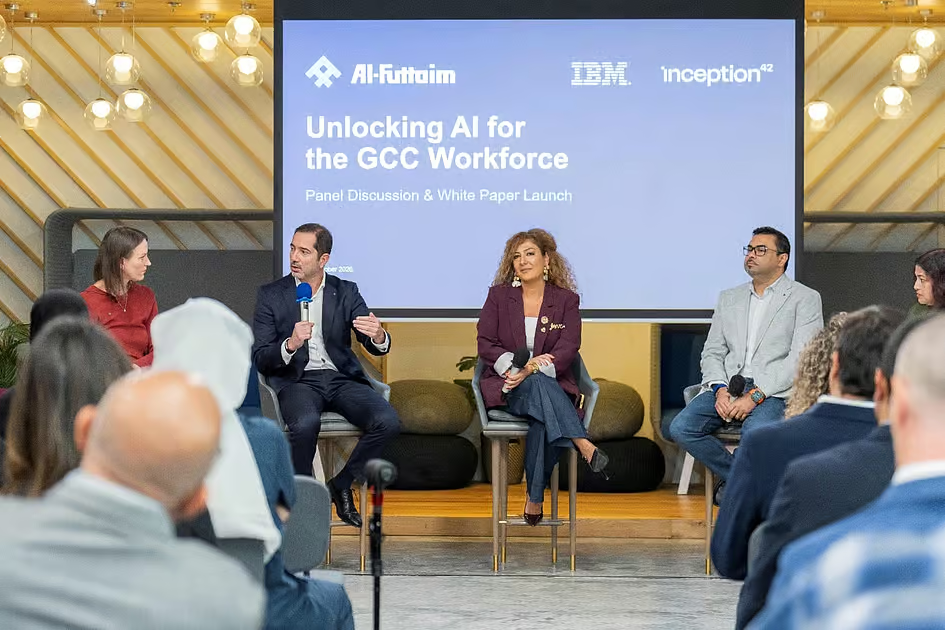
The findings were presented at the Unlocking AI for the GCC Workforce event on Thursday in Dubai, where business and technology leaders discussed why introducing AI tools alone is not enough to transform the workplace.
The survey was conducted in March 2026 across the six GCC countries. Most respondents were based in the UAE and Saudi Arabia, while smaller samples came from Kuwait, Qatar, Bahrain and Oman. A total of 1,143 professionals across the GCC, covering sectors including retail, automotive, hospitality and technology were surveyed.
Stay up to date with the latest news. Follow KT on WhatsApp Channels.
The report cautioned that findings from the smaller markets should be treated as indicative rather than representative of their national workforces.
AI is saving employees hours every week
Despite concerns over readiness, many workers are already seeing benefits from AI. According to the report, 73 per cent of regular AI users said the technology had improved their productivity, while 35 per cent of respondents reported saving at least four hours a week.
The findings suggest that AI is moving beyond experimentation and becoming part of everyday work, helping employees complete tasks more efficiently.
The benefits, however, are not necessarily reaching everyone equally.
Why is AI training falling behind?
While 53 per cent of respondents said their organisations actively encourage AI use, only 20 per cent reported receiving extensive training. The report also identified data security and a lack of training among the main barriers preventing employees from making better use of AI.
During a panel discussion at the Dubai event, speakers stressed that traditional training programmes may not be enough to help employees change the way they work.
One panellist described how an organisation had introduced AI learning content and recorded strong participation, but initially struggled to see meaningful changes in everyday work.
The turning point, the speaker explained, came when employees were encouraged to think about the specific problems AI could help them solve, rather than simply learning how to use the technology.
The discussion highlighted the importance of making AI training relevant to different roles, from frontline customer service to office-based employees. Instead of introducing technical concepts in isolation, speakers encouraged organisations to demonstrate how AI could help workers address familiar challenges in their daily responsibilities.
Can AI training improve confidence?
The study found that employees who received extensive AI training were 2.5 times more likely to report high confidence than those who had received none. They were also twice as likely to save four or more hours each week.
The findings suggest that structured training can help employees move beyond occasional AI use and apply the technology more effectively.
Speakers at the event also emphasised that employees need opportunities to experiment with AI and develop practical skills over time. They described AI adoption as an ongoing process that requires changes in workplace culture, rather than a one-time technology rollout.
Why trust remains a major challenge?
Data security was the most frequently cited barrier to AI adoption in the study, with 36 per cent of respondents identifying it as a concern.
During the discussion, business leaders pointed to the importance of trust, particularly in organisations operating across different industries and regulatory environments. Speakers stressed that security, governance and responsible use need to be considered from the beginning of an AI project, rather than added after the technology has been introduced.
Without these safeguards, employees may remain reluctant to use AI tools, even when they have access to them.
What should GCC companies do next?
Beyond individual productivity, the panel discussed how organisations could redesign business processes around AI.
Rather than simply using the technology to complete existing tasks faster, speakers suggested that companies should examine how entire workflows could be improved while keeping people at the centre of the transformation.
Leadership was another recurring theme, with panellists emphasising the need for senior executives to support AI adoption and encourage employees to experiment with new ways of working.
The report also found that AI adoption was three times higher in organisations where senior leaders actively used the technology themselves.
For GCC businesses, the findings point to a challenge that goes beyond providing access to AI tools. As the technology becomes part of everyday working life, companies will need to ensure employees have the skills, confidence and support to use it effectively.
Source: Khaleej Times