

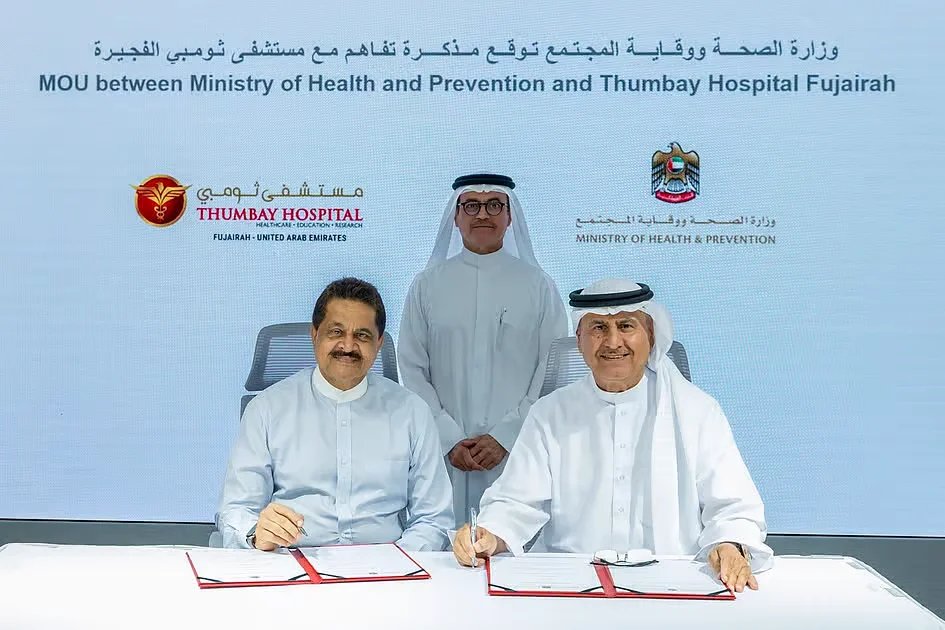
The UAE’s health ministry signed memoranda of understandings with five private healthcare facilities, aimed at building an integrated system between public and private sectors in managing exceptional and emergency cases.
The five hospitals are: Thumbay Group Hospitals, University Hospital, Ajman Hospital, Fujairah Hospital, Amina Hospital, and Dar Al Kamal Hospital.
The agreements also ensure continuity of healthcare services in line with highest standards of quality and efficiency under a unified national framework for preparedness and response.
Stay up to date with the latest news. Follow KT on WhatsApp Channels.
The signing ceremony was attended by Dr Amin Al Amiri, Assistant Undersecretary for the Health Regulation Sector, while the agreements were signed on behalf of the authority by Dr Abdul Karim Abdullah Al Zarouni, Emergency, Crisis and Disaster Advisor.
Emergency response
Under the memoranda, the authority will directly oversee the development and regular updating of emergency medical response plans for participating hospitals, including medical evacuation protocols and business continuity strategies to ensure the delivery of essential services during emergencies.
The ministry will also update risk registers for each facility and engage their personnel in simulation exercises and specialised training programmes.
Meanwhile, the participating facilities have committed to mobilising their logistical and medical capabilities in support of the national system. This includes allocating 30 per cent of their bed capacity to be placed at the disposal of the ministry’s operations centre upon request, maintaining a strategic stockpile of essential medicines and supplies for no less than two months, and establishing dedicated, fully equipped control rooms to ensure continuous coordination with the ministry’s operations centre.
The memoranda include clear commitments to digital integration through the ‘Jahiz’ and ‘Mawardna’ platforms to ensure real-time data flow, supporting faster, evidence-based decision-making.
The continued investment in training, joint simulation exercises, strategic medical stockpiles, and connected command centres directly enhances institutional and community readiness. The ministry will continue to provide technical and supervisory support to its private sector partners to ensure the highest levels of preparedness to address health emergencies.
Technical integration
On the technical integration front, the memoranda require healthcare facilities to regularly update their medical resource data through approved digital platforms while complying with Cabinet decisions governing the publication and exchange of health information related to communicable diseases.
They also mandate strict confidentiality of shared data to ensure the accuracy and integrity of official communication during emergencies.
For their part, officials from private healthcare facilities stressed their commitment to supporting the ministry’s efforts to strengthen health security and enhance the efficiency of the national system in addressing emergency challenges through a proactive and integrated approach.
They affirmed that integration with the public sector reinforces shared social responsibility and helps unify preventive and treatment efforts under a single framework, ensuring business continuity and community protection, while underscoring the UAE’s leadership in setting global standards for preparedness and flexible response to health crises at all levels.
Source: Khaleej Times