

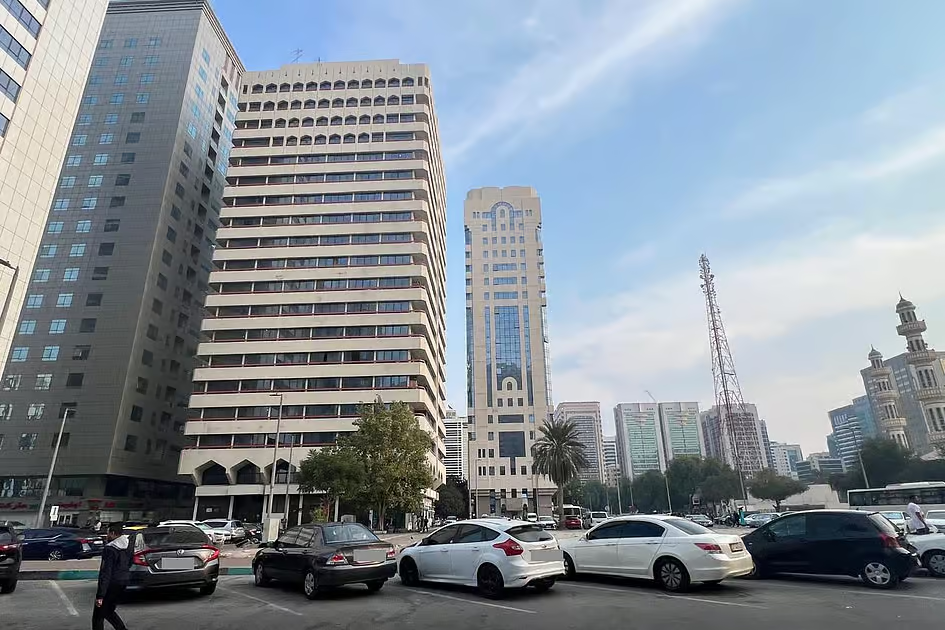
Abu Dhabi’s temporary rent freeze initiative across the commercial and residential sectors is being viewed by economists and real estate experts as a short-term market stabilisation measure designed to protect tenants and businesses amid rapid rental growth and regional uncertainty.
The measure, introduced in June 2026, effectively suspends Abu Dhabi’s long-standing 5 per cent annual cap on rent increases by requiring landlords to renew existing leases at the same rent as the previous Tawtheeq-registered contract.
Stay up to date with the latest news. Follow KT on WhatsApp Channels.
Authorities have described the move as a temporary intervention aimed at containing sharp rental increases driven by record occupancy rates, strong public-sector demand and rising lease costs.
According to the report, residential rents in Abu Dhabi have risen by around 15 per cent and by as much as 23 per cent in investment zones, even as new supply is being developed.
The policy represents a significant shift from the emirate’s previous rent control framework. Abu Dhabi originally imposed a 5 per cent cap on annual rent increases in 2006, removed it in 2012 and reinstated it in 2016. The latest freeze goes further by preventing any rent increases on existing contracts.
The report notes that rent controls have been used in various forms around the world, often during periods of crisis or economic disruption. During the Covid-19 pandemic, countries including the UK and Canada temporarily restricted rent increases and evictions to support tenants facing financial pressure.
Economists remain divided on the long-term effects of rent freezes. Supporters argue that such measures protect households and businesses from sudden rent shocks and provide greater financial stability. Critics, however, warn that prolonged controls can discourage investment, reduce housing supply and lead to lower-quality rental stock over time.
The report points to examples from Sweden, New York and Berlin, where long-running rent controls were associated with housing shortages, reduced market liquidity and lower investment levels. At the same time, it notes that temporary and carefully managed rent freezes have been effective in helping markets absorb short-term shocks.
According to the analysis, successful rent freezes typically share several characteristics: they are temporary, supported by clear exit strategies, accompanied by policies that increase housing supply, and backed by transparent enforcement and dispute-resolution systems.
Andrew Laver, Director of Commercial Valuation in Abu Dhabi, said the freeze provides investors with greater certainty about near-term rental income.
“With rental levels effectively fixed in the near term, investors can assess acquisitions with a clearer understanding of income profiles. Although short-term returns may appear slightly compressed compared to earlier expectations, the trade-off comes in the form of reduced volatility and strengthened market confidence,” he said.
The report concludes that Abu Dhabi differs from many international examples because of its strong population growth, fiscal capacity and relatively young rental market. It argues that the freeze is more likely to act as a temporary shock absorber than a permanent market intervention, particularly as it forms part of a broader package of measures that includes land releases, zoning reforms and investment aimed at increasing supply.
While economic theory highlights the risks of prolonged rent controls, the report suggests that Abu Dhabi’s approach may help provide stability and predictability during a period of strong demand, provided the measure remains temporary and is accompanied by continued expansion of housing and commercial property supply.
Source: Khaleej Times