

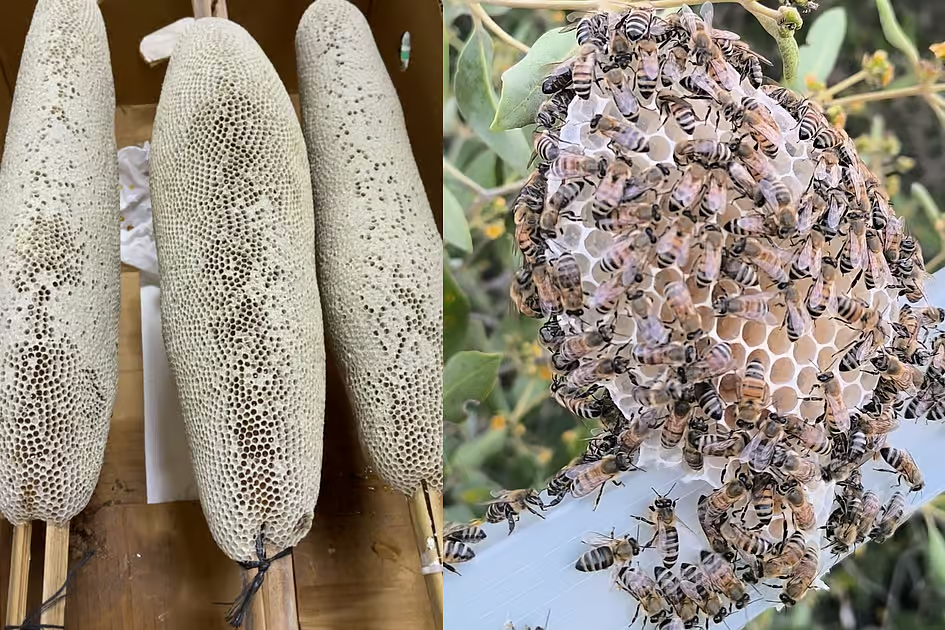
In the rugged mountains and along the mangrove-lined shores of Ras Al Khaimah, the annual honey harvest offers a glimpse into a tradition shaped by nature, patience, and generations of beekeeping expertise.
For beekeepers across the emirate, the honey season begins in spring and continues through different flowering cycles. Samar honey is typically harvested between mid-May and mid-June, while Sidr honey follows later in the year, from October to November. Other varieties, including mangrove and ghaf honey, emerge during different seasons depending on flowering conditions.
However, the 2026 season has been markedly different. Jamal Rashid Hamdoun, owner of Raghuh Honey, said heavy rainfall earlier this year affected the flowering of mountain trees such as Samar and Sidr, leading to lower honey yields in some areas.
Stay up to date with the latest news. Follow KT on WhatsApp Channels.
“Many beekeepers noticed that mountain honey production was lower than in previous years because of the abundant rainfall,” Hamdoun said. “The rain affected flowering periods and reduced nectar collection, which limited honey production in several mountain locations.”
While mountain honey output declined, Ras Al Khaimah’s coastal mangroves told a different story. “In contrast, the mangrove honey season was exceptional,” he said. “Production was abundant, and the quality of the honey was excellent.”
Watch this video of beekeepers placing hives along Ras Al Khaimah’s mangrove coast for honey production :
The contrast highlights the emirate’s unique landscape, where mountains, valleys, and coastlines support a diverse range of honey varieties. Among the most sought-after are Samar, Sidr, and mangrove honey, each carrying distinctive characteristics shaped by its environment.
According to Hamdoun, mountain honey from Ras Al Khaimah is prized for its strong flavour, rich aroma, and dense texture. Produced from the nectar of wild Sidr and Samar trees as well as seasonal mountain plants, it benefits from the region’s relatively untouched natural environment.
Honey extraction
Yet reaching these honey sources is often far from easy.
Beekeepers frequently navigate steep slopes, rocky terrain, and remote mountain locations to access their hives. Transporting bee colonies and harvesting equipment through the mountains requires both experience and physical endurance, while sudden weather changes can further complicate the process.
Saif Al Hebsi, a honey enthusiast familiar with the region’s beekeeping traditions, said weather conditions have had a noticeable impact on this year’s Samar honey season.
“The Samar season usually begins when the trees flower in late May, and the honey is ready for harvesting in June,” Al Hebsi said. “This year, rainfall delayed flowering, which pushed back production and harvesting.”
He noted that Samar trees thrive in mountainous areas of Ras Al Khaimah such as khatt and Fujairah, making mountain ecosystems essential to the production of one of the UAE’s most recognised honey varieties.
Once honeycombs inside the hive have matured, the harvesting process begins. Beekeepers carefully inspect the frames to ensure the honey cells have been sealed with a wax cap, a sign that the honey has reached the proper moisture level.
The frames are then removed from the hive, the wax covering is gently cut away, and the honey is extracted using a centrifugal machine that spins the frames without damaging the comb. Afterward, the honey is filtered to remove natural impurities, then packaged and prepared for sale.
The following vidieo shows honey extracted from Ruʾūs al-Jibāl which translates to mountain tops in Ras Al Khaimah:
From hive to table
The journey from the hive to the consumer can be especially demanding in mountain apiaries, where harvested honey and equipment must be transported across difficult terrain before reaching processing facilities and markets.
Hamdoun said honey prices vary considerably depending on the variety, production levels, and harvesting location. Rare varieties such as Samar honey typically command higher prices, while honey collected from remote mountain areas can be more expensive due to the additional effort and costs involved in production.
Despite the challenges, beekeepers continue to rely on a blend of inherited knowledge and modern techniques. Many learned to track bee activity and locate colonies from their fathers and grandfathers, while others have supplemented traditional skills with contemporary beekeeping training.
For Ras Al Khaimah’s beekeepers, the reward lies not only in the harvest itself but in preserving a tradition that reflects the emirate’s diverse natural landscapes.
From mountain cliffs covered with Samar and Sidr trees to coastal mangrove forests, each jar of honey captures a different part of Ras Al Khaimah’s environment , and the effort required to bring it from nature to the table.
Source: Khaleej Times