

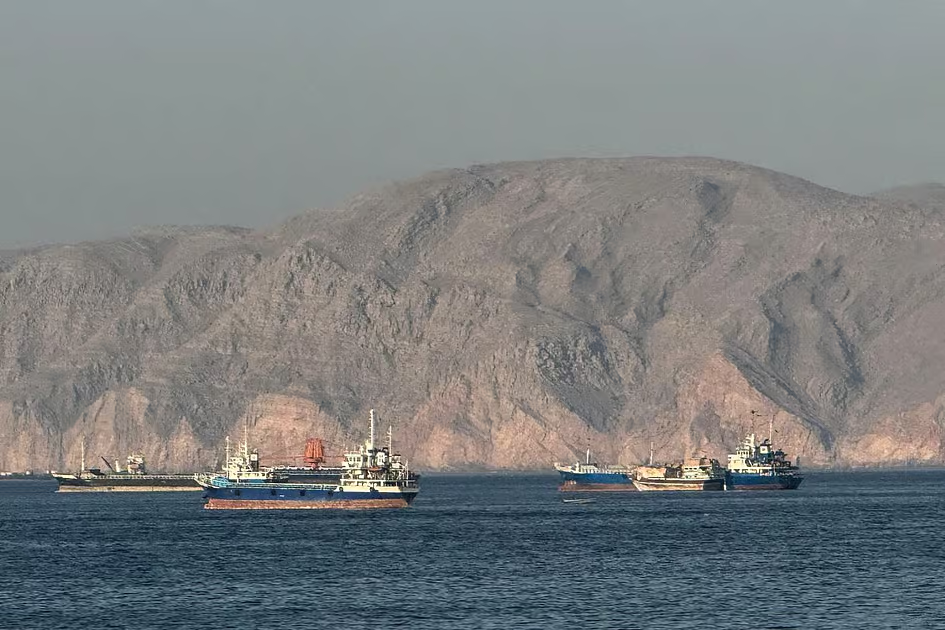
Oil prices edged lower on Wednesday on hopes of a de-escalation in Iran war hostilities that could restore shipping traffic in the Strait of Hormuz and oil flows in the Middle East.
However, losses were capped by a maritime embargo declared by Yemen’s Iran-aligned Houthis on Saudi ports and vessels, heightening risks to Red Sea shipping.
Before the war started, about 20% of the world’s oil and liquefied natural gas passed through the Strait of Hormuz. Brent crude futures were down 2 cents, or 0.03%, at $79.34 a barrel by 11:51 a.m. ET (1551 GMT). U.S. West Texas Intermediate futures fell 35 cents, or 0.46%, to $75.42.
U.S. President Donald Trump said there was an “all-day negotiation” on Tuesday with Iran, characterizing the talks positively while also threatening to hit Iran “really hard” if a deal with Tehran was not reached.
But Tehran denied that peace talks were under way.
“There still is some scepticism in the market about who is negotiating with whom and what the agreement may ultimately mean for shipping,” said Andrew Lipow, president of Lipow Oil Associates, noting, however, that the market remains optimistic about the prospects of reopening of the strait. Reports about progress in efforts to end the war drove prices down 5% on Tuesday, with Brent closing below $80 a barrel for the first time since July 13.
“The main sticking point appears to be whether Iran will
continue to insist on a degree of control over the waterway, and
whether the U.S. will stand its ground and refuse that outcome,”
IG analysts said in a note.
A build in U.S. crude inventories as refineries eased their
processing slightly pressured prices, as did a slight rise in
imports.
Crude stockpiles rose by 2.5 million barrels to 407 million
barrels last week, data from the Energy Information
Administration showed on Wednesday. Analysts had expected a
1.5-million-barrel draw.
The losses were limited as shipping risks in the Red Sea after
Yemen’s Iran-aligned Houthi rebels said on Wednesday they had
attacked a Saudi oil tanker off Yanbu, a key port for Saudi
crude oil exports on the Red Sea.
A surge in attacks on Russian and Ukrainian ships, ports and
export terminals in the Black Sea is disrupting global supplies
of grain and oil, turning the region into the latest strategic
trade chokepoint to be hit by escalating conflict.
The Caspian Pipeline Consortium has repeatedly suspended
operations this week because of safety concerns and a lack of
tankers, numerous trading sources said, as the main export route
for Kazakh crude oil struggles to recover from drone attacks.
Elsewhere, China further relaxed controls on fuel exports in
August.
Source: Khaleej Times