

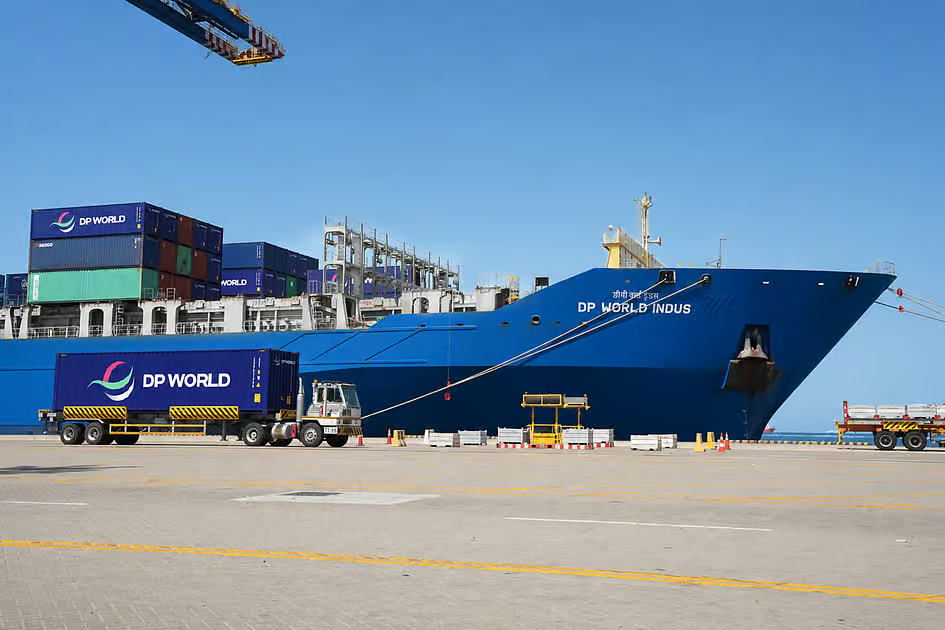
Global trade is expected to remain resilient despite geopolitical disruption, climate pressures and changing trade policies, with 94 per cent of more than 3,500 supply chain and logistics executives expecting trade growth in 2026 to match or exceed 2025 levels, according to DP World.
The findings suggest global trade is being reconfigured rather than reversed, even as established shipping routes come under growing pressure and businesses seek alternative ways to move goods between markets.
Stay up to date with the latest news. Follow KT on WhatsApp Channels.
At the same time, the geography of global trade is changing rapidly. Merchandise exports between developing economies have increased nearly 20-fold from approximately $500 billion in 1995 to $8.8 trillion in 2025.
Today, more than half of developing-country exports are destined for other developing markets, highlighting the growing importance of South-South trade.
The figures were highlighted in Navigating the Future of Maritime Trade, a new whitepaper published by DP World’s Marine Services business to mark World Maritime Day 2026.
$14 trillion in goods move through maritime networks
The changing trade landscape has major implications for shipping, with more than 80 per cent of world merchandise trade by volume transported by sea.
Maritime networks carry an estimated $14 trillion worth of containerised goods, making their resilience increasingly important as geopolitical tensions, climate pressures and changing trade policies test established routes.
Ganesh Raj, Global COO of Marine Services at DP World, said agility and the ability to adapt are becoming increasingly important for business confidence and growth.
He said a key part of the response is developing what DP World calls “Connected Trade Corridors”, linking ports, marine services and inland logistics so cargo has alternative routes when conditions change.
“The first generation of global trade connected markets. The next must connect those markets through smarter, more adaptable networks,” Raj said.
Manufacturing shifts to new regions
DP World said disruption is no longer episodic, with tariffs and the redistribution of manufacturing contributing to structural changes in how cargo moves around the world.
Manufacturing is becoming more geographically dispersed, with India, Southeast Asia, Latin America, the Middle East and Africa playing larger roles in global production.
The changes are creating new regional shipping patterns and increasing the importance of feeder, coastal and shortsea shipping services.
These services can connect emerging production centres and regional ports with major international trade lanes, while integration with rail, road and river networks can give businesses additional gateways when established corridors are disrupted.
South-South trade reaches $8.8 trillion
The rise of developing economies in global manufacturing has been accompanied by a significant expansion in trade between them.
Merchandise exports between developing economies climbed from around $500 billion in 1995 to $8.8 trillion in 2025, an increase of nearly 20 times over three decades.
More than half of developing-country exports now go to other developing markets, reinforcing the growing importance of trade flows outside traditional developed-market corridors.
DP World network connects more than 200 ports
DP World said greater choice in gateways and transport options can help businesses respond more effectively when operating conditions change.
Its Marine Services network connects more than 200 ports across Northern Europe, the Mediterranean, the Middle East, Africa, Asia and the Americas, supported by a fleet of more than 500 vessels.
The company said the next phase of global maritime trade will increasingly be shaped by the strength and adaptability of networks linking regional and global trade corridors, rather than relying solely on established shipping routes.
Source: Khaleej Times