

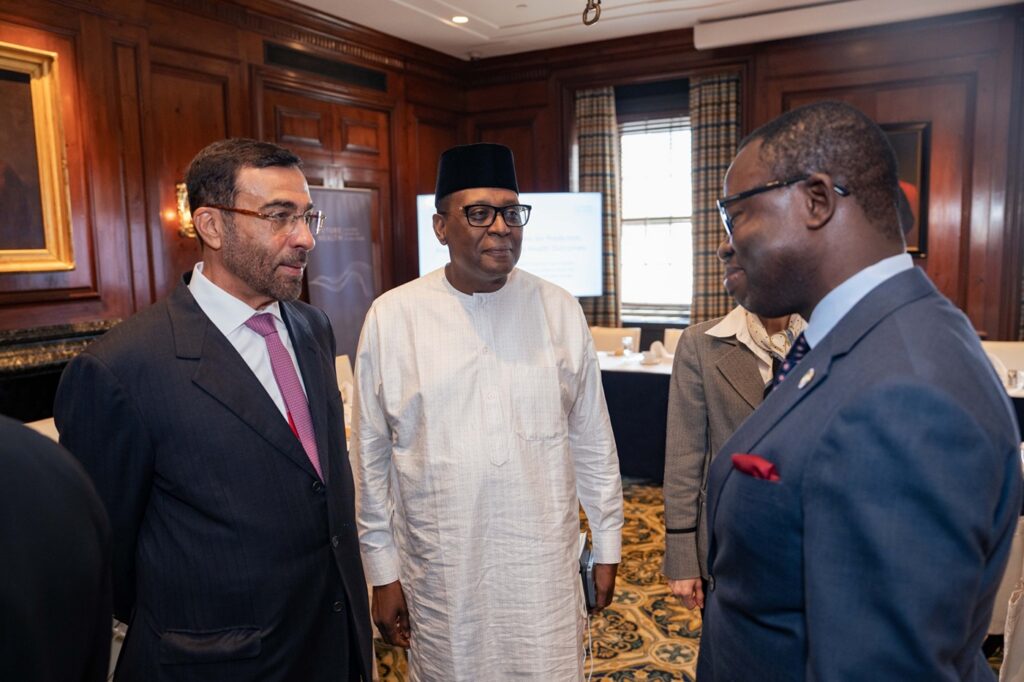
NEW YORK, 27th September, 2026 (WAM) — Future Health – A Global Initiative by Abu Dhabi convened Ministers, senior government representatives, and global health leaders in New York on the sidelines of the 81st Session of the United Nations General Assembly (UNGA 81). The high-level dialogue set out practical priorities for moving health systems from reactive treatment towards prediction, prevention, and earlier intervention.
Chaired by Ahmed bin Ali Al Sayegh, Minister of Health and Prevention, the dialogue brought together participants from the United Arab Emirates, Angola, Brazil, Ethiopia, Finland, Guyana, Indonesia, Madagascar, Mali, Nigeria, Rwanda, Sweden, the United Kingdom, the United Republic of Tanzania and the United States of America.
Across different national contexts, four connected requirements emerged: population data to identify risk earlier; financing and incentives for prevention; delivery capacity to turn insight into timely services; and trusted, inclusive systems that reach people where they live. Prevention was also recognised as an investment in human capital.
Examples included national life-course screening; integrated demographic, clinical, and genomic data; community health workers supported by digital records; decentralised care; and policy action on nutrition, affordability, and healthier behaviour.
Al Sayegh said, “Investing in prevention is an investment in people, and in the future of our societies. As science gives us a better understanding of risk, we must ensure that knowledge leads to earlier action and better health. The UAE remains committed to working with international partners, sharing experience, and strengthening cooperation to build health systems that ensure the health of our populations well into the future.”
Held under the theme ‘Redesigning Health Systems for Prediction, Prevention and Population Health Outcomes’, the discussion examined how health systems can best adopt scientific advances and move from pilots to population-scale delivery.
The dialogue reinforced that prevention depends on the environments in which people live and work, as well as trusted community infrastructure that supports everyday prevention and outbreak response. It also identified screening, referral, affordability and physical accessibility as barriers that must be addressed to ensure that earlier intervention benefits populations equitably.
Representing the Department of Health – Abu Dhabi, Dr. Ahmed AlKhazraji, Executive Director of Healthy Living, shared how the emirate is putting prevention into practice through its Healthy Living Strategy. Abu Dhabi is combining its health data and life sciences capabilities with cross-sector initiatives in the everyday settings that shape choices, including communities, workplaces and schools.
Dr.AlKhazraji said, “The ability to identify risk earlier is a major advance, but insight alone will not improve health. We need to act on the factors that influence health long before someone enters a clinic. In Abu Dhabi, that means working across government and with the private sector to make healthier choices more accessible, from the food people encounter in supermarkets and restaurants to the opportunities for children to eat well and be active at school. This is how prevention moves from ambition to delivery at population scale”.
Dr. AlKhazraji added, “We invite leaders from across the global health ecosystem to continue this conversation at the Abu Dhabi Future Health Summit from 20-22 October 2026.”
Source: Emirates News Agency