

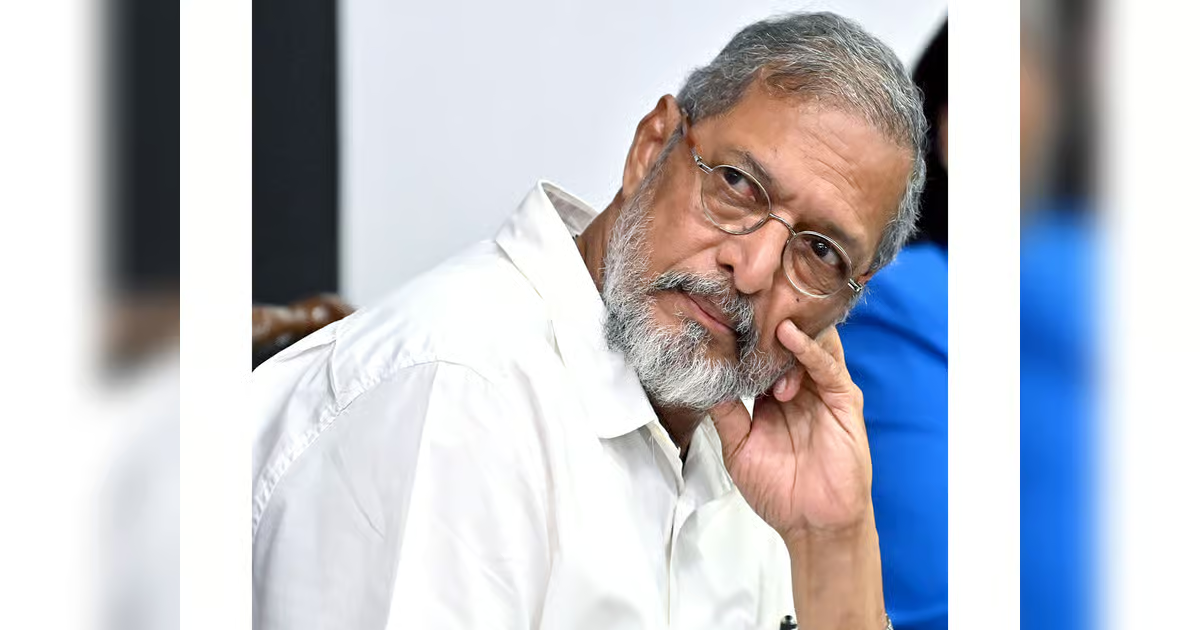
I first met Nana Patekar in 2015 at The Palm. He had been shooting there with John Abraham. I later met him at the Grand Hyatt where he was filming Welcome Back. To many, he seemed elusive. I, however, discovered an artist with many layers. Over a period of time, we came to know each other well. Occasionally, we would exchange a ‘good morning’ or a ‘good evening’ message, apart from the Diwali and birthday greetings.
Nothing about Nana was subtle or understated. Here was a man who had come to embody explosive intensity. His screen presence screamed for attention — remember the pyrophobic gangster Anna in Parinda? Or his much mimicked dialogue in Krantiveer? Or the terrifying sadist husband in Agnisakshi? Or the Marathi Shakespearean actor in Natsamrat? He also held his own in comedies like Taxi No 9211, Welcome Back, Bluffmaster. His performance drew applause and accolades, proving just how much he was liked by the masses and classes alike. Who can forget his brilliance in Khamoshi, Ab Tak Chhappan, his own film Prahaar, then Raajneeti, Tirangaa, Apaharan, Salaam Bombay, Dr Prakash Amte?
Nana was not for the faint-hearted. Tales of his fiery temper appeared frequently in the media, some as bizarre as him running behind crew members with his slippers because they brought in a camera that distracted him. Here was a legend, a master of the craft, who was in news for slapping directors and faced harassment allegations during the #MeToo movement.
At the shoot at The Palm, he interjected John Abraham a couple of times, and the latter, being the sport that he is, heard him out patiently. His reputation of being the tough guy made me think twice about our first meeting. But I was to be surprised.
Dressed in a grey T-shirt and tracks, Nana opened the door to his suite when my photographer and I walked in to interview him. The rest of the crew were in other rooms. I asked him about his theatre days. He picked up a tin of biscuits and offered them to me saying, “Yeh bahut achcha hai, try this” (this is very good, try this). This was his way of warming up to the conversation. Another distinct habit that I remember was to address most people as ‘tu’ not ‘tum’ or ‘aap.’ It was as endearing as it was radical, especially because it helped him connect with people easily.
After we finished the interview, I asked him to mail his pictures that would accompany my story. Jokingly, he asked me to send mine. I sent him a picture of mine with my child, to which he remarked, “Your son looks better than you.”
In interviewed him several times later — last being for his NGO the Naam Foundation that supports drought-stricken farmers and families in rural Maharashtra. Every January 1, I would wish him on his birthday, and the very next day, he would wish me on mine.
Actors like Nana leave a part of them in the people they meet. On the first day of 2027, we will remember him yet again and put up posts celebrating him. I may do that too. Only this time, there will be no reply.
Source: Khaleej Times