

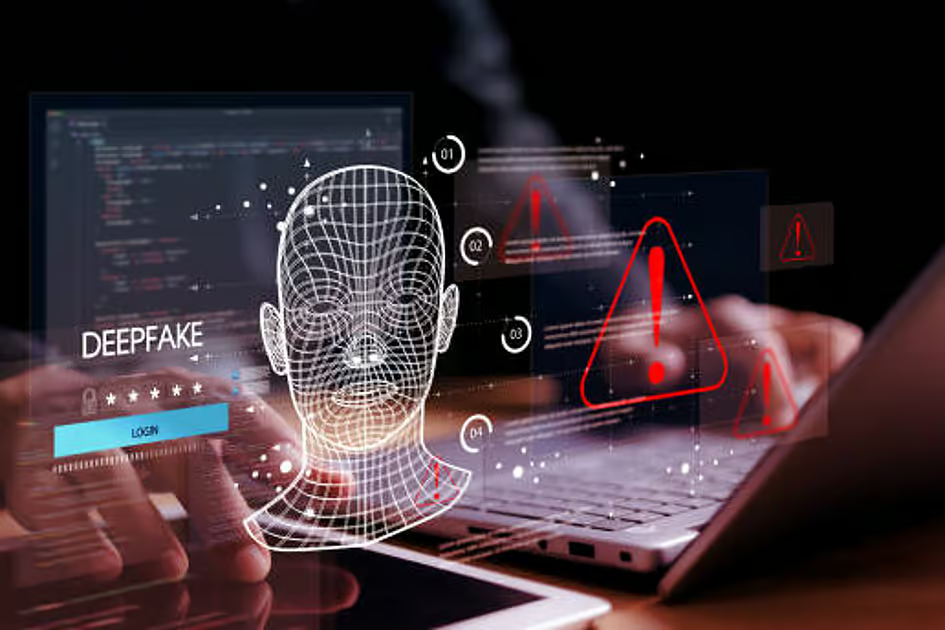
Have you ever come across a social media video that looked almost too real to be fake, or an image so convincing that you wondered whether it was AI-generated? As artificial intelligence makes it increasingly difficult to distinguish fact from fabrication, Dubai Police warned that deepfakes could pose a growing threat not only by spreading false information, but also by making people question what is genuine.
A new study by the Dubai Police Future Foresight Centre highlights how realistic AI-generated videos, images and voices could complicate digital security, undermine trust in online information and make it harder to verify evidence used in investigations.
The challenge, the study warns, may soon extend beyond spotting fake content to proving that genuine photographs, videos and audio recordings have not been manipulated.
Stay up to date with the latest news. Follow KT on WhatsApp Channels.
How deepfakes could be used for fraud
Advances in generative AI are making it easier to replicate human faces and voices and produce convincing videos and audio recordings, said Brigadier Dr Hamdan Ahmad Hamdan Al Ghassiya, director of the Future Foresight Centre at Dubai Police.
These capabilities could be exploited for identity theft, impersonation, fraud and the deliberate spread of misleading information, creating risks for individuals, businesses and security authorities.
The consequences could also extend to investigations and important decisions that rely on digital evidence. As manipulated content becomes more sophisticated, verifying whether a recording is authentic could become increasingly difficult.
‘Real’ content could also come under suspicion
One of the study’s key concerns is that deepfakes could erode confidence in authentic information. Even genuine photographs, videos and voice recordings may be questioned as people become more aware of how easily digital content can be fabricated.
This means that authorities must identify manipulated material while also establishing the authenticity of genuine content.
The study therefore highlights the importance of checking the origins and integrity of digital files, helping individuals and institutions assess whether what they see or hear can be trusted.
Misinformation ranks among major global risks
The concerns reflect a wider international challenge. Misinformation and disinformation ranked as the second most significant global risk over the next two years, according to the World Economic Forum’s Global Risks Report 2026.
The growing accessibility of AI tools could make digital manipulation more convincing and easier to carry out, increasing pressure on organisations responsible for verifying information and protecting the public.
Can AI help detect deepfakes?
While artificial intelligence is contributing to the problem, it could also help address it.
The study identifies opportunities to use AI tools to analyse images, videos and voices for signs of manipulation. More advanced digital forensic techniques could also help investigators verify evidence and respond to increasingly sophisticated forms of fraud.
However, technology alone will not be enough. The study stresses the importance of public awareness, stronger digital verification skills and procedures that help organisations respond to emerging threats.
What needs to be done
Rather than waiting for new forms of digital deception to become widespread, the study calls for security authorities to monitor technological developments, identify early warning signs and assess potential risks in advance.
It also highlights the need to combine technological tools with public education and institutional preparedness to maintain confidence in digital information.
The study forms part of the Ministry of Interior’s ‘Safe UAE Through Your Digital Awareness’ campaign, launched in cooperation with Dubai Police and the Dubai Electronic Security Centre. It coincides with Cybersecurity Awareness Month, observed every October.
The broader goal, Al Ghassiya said, is not simply to detect fake content, but to preserve trust in genuine information as AI continues to change how people create, share and consume digital media.
Source: Khaleej Times