

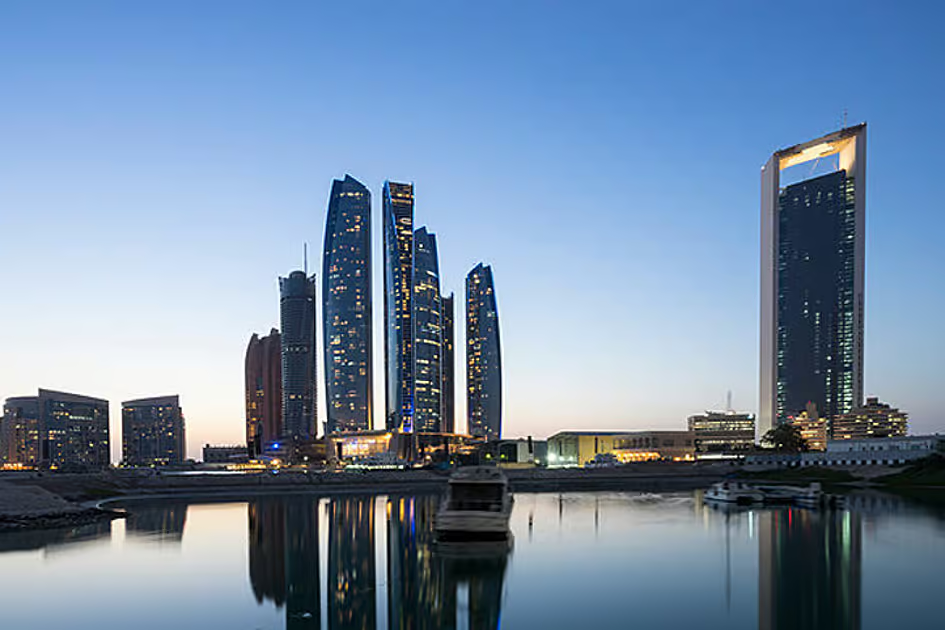
Abu Dhabi has ranks as the world’s sixth largest city market for branded residences, with 26 projects in the development pipeline, as the emirate accelerates its expansion into luxury residential properties, according to a new industry report.
The inaugural annual report, The Brand Standard, published by specialist advisory firm Global Branded Residences (GBR), identified 31 branded residential projects in Abu Dhabi, including five completed developments and 26 planned or under development.
The emirate’s pipeline ranks joint third globally alongside Cairo, behind only Dubai and Miami, highlighting Abu Dhabi’s growing position in the international luxury property market.
One of the report’s most significant findings is that 92 per cent of Abu Dhabi’s upcoming branded residences are standalone developments, meaning they are built without an operating hotel on site.
Stay up to date with the latest news. Follow KT on WhatsApp Channels.
This compares with 37 per cent of branded residence projects globally, suggesting that Abu Dhabi is adopting a development model more commonly associated with mature luxury residential markets.
Abu Dhabi accelerates standalone developments
Standalone projects account for 83 per cent of Abu Dhabi’s total branded residences market, including completed and future developments.
GBR said the shift towards standalone properties typically occurs as markets mature and buyers, developers and brands become more comfortable with residential projects that do not depend on an adjoining hotel.
In Dubai, standalone developments account for 77 per cent of the branded residential pipeline.
Riyan Itani, Founder of Global Branded Residences, said Abu Dhabi has benefited from its proximity to a market where developers, brands and buyers already have significant experience with branded properties.
“That experience is transferable,” Itani said, explaining that Abu Dhabi has been able to move more quickly towards a model that usually takes years to become established in other markets.
Global branded residences command 44% price premium
Globally, the branded residences sector has expanded to 1,972 projects across more than 100 countries, according to GBR.
Of these, 848 developments have been completed, while another 1,124 are in the pipeline.
The report found that branded residences command an average price premium of 44 per cent compared with equivalent non-branded residential properties worldwide.
The premium reflects the value buyers place on brand recognition, property management, services and lifestyle offerings associated with luxury residential developments.
Luxury brands expand in Abu Dhabi
Abu Dhabi’s branded residences market includes a growing mix of international hospitality groups and non-hotel luxury brands.
Brands represented in completed and upcoming projects include Mandarin Oriental, Four Seasons, St. Regis, W, Waldorf Astoria, Elie Saab, Jacob & Co., Henge, BRABUS and SHA.
Marriott is the most active parent group in the emirate, with five developments in the pipeline, followed by Accor with three projects.
At the individual brand level, Mandarin Oriental and Four Seasons have two projects each, while Elie Saab leads among non-hotel brands with two upcoming developments.
UAE leads Middle East branded residences market
The UAE remains the largest branded residences market in the Middle East and North Africa, with 260 projects, including 185 in the pipeline.
Across the wider MENA region, the report identified 426 branded residential projects, comprising 118 completed developments and 308 in the pipeline.
The region accounts for more than 27 per cent of the global development pipeline.
Saudi Arabia follows the UAE with 60 projects, including 51 in development, while Egypt has 46 projects, of which 41 are in the pipeline.
Standalone developments represent 47 per cent of MENA’s branded residential market, rising to 52 per cent of projects in the pipeline.
Hotel brands continue to dominate the region, accounting for 73 per cent of projects, while non-hotel brands represent 27 per cent.
Among non-hotel brands, fashion labels account for 54 per cent of the regional market.
Growing global wealth supports luxury property demand
The expansion of branded residences comes as wealthy buyers increasingly seek high-quality, professionally managed homes that offer convenience, privacy and premium services.
Knight Frank’s The Wealth Report 2026 identifies branded residences as one of the key structural trends shaping global luxury property markets.
The report highlights rising global wealth, increased mobility among high-net-worth individuals and a shortage of move-in-ready luxury homes as factors supporting demand for branded residential developments.
Knight Frank also identifies Abu Dhabi as an emerging destination for ultra-high-net-worth individuals seeking a more discreet, lower-profile lifestyle.
According to the report, the global population of individuals with wealth exceeding $30 million reached 713,626 in 2026, compared with 551,435 in 2021.
The report forecasts that the UAE’s ultra-high-net-worth population will grow by 36 per cent, from 4,851 in 2026 to 6,588 by 2031.
The figures suggest a growing potential customer base for premium residential developments, although the two reports do not directly quantify how much of this wealth growth will translate into branded residence purchases.
MENA pipeline continues to expand
Across MENA, Accor has the largest parent-company branded residence portfolio with 64 projects, followed by Marriott with 62.
At the individual brand level, Four Seasons and Fairmont lead with 18 projects each, followed by Ritz-Carlton with 17, Address with 16 and St. Regis with 13.
The report also found that 47 per cent of the region’s branded residences are in urban locations, while 28 per cent are resort developments and 25 per cent combine urban and resort characteristics.
GBR said its new annual report and accompanying Data Hub aim to provide developers, investors and operators with greater visibility into branded residential development, investment trends and global
Source: Khaleej Times