

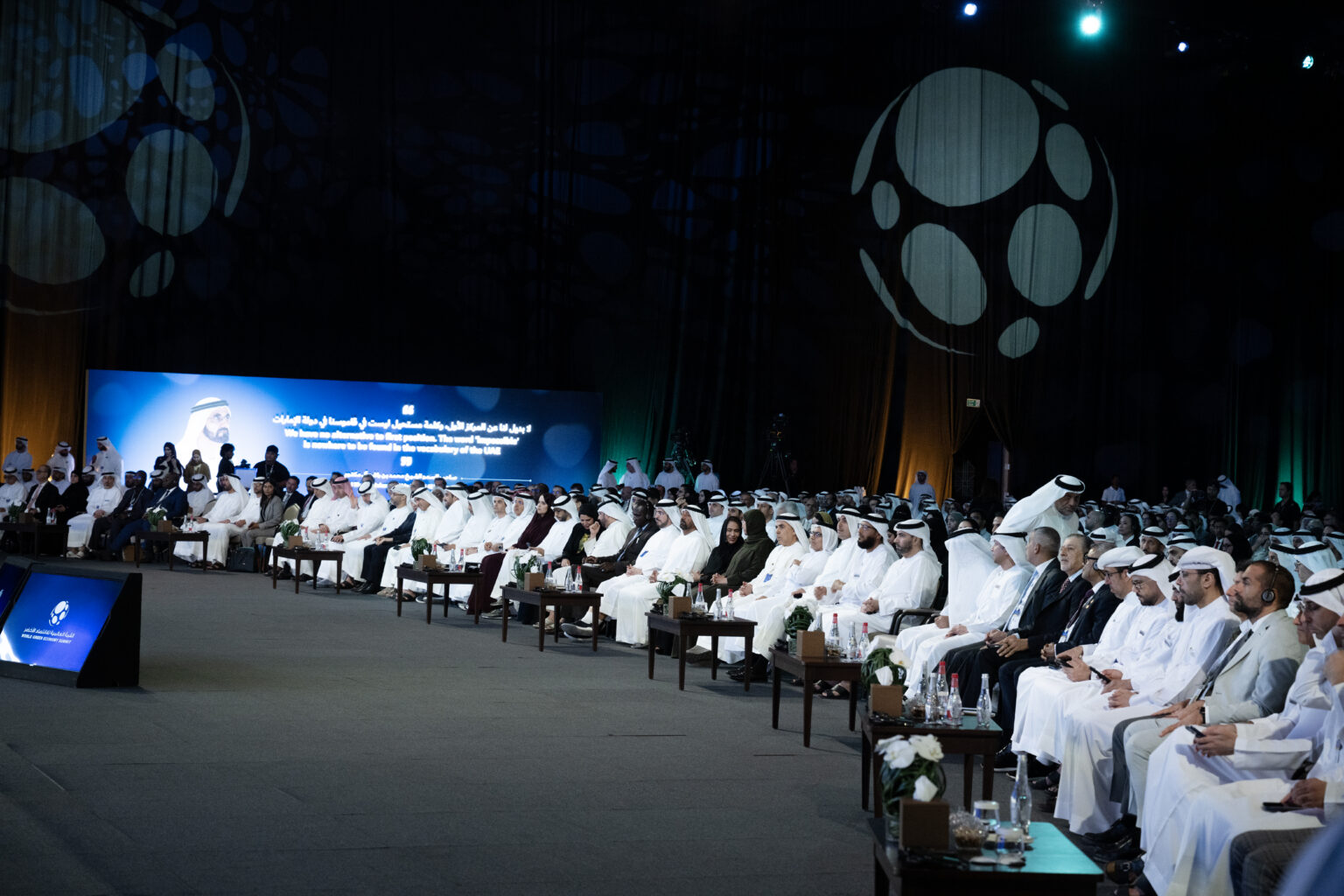
DUBAI, 21st October, 2026 (WAM) — Under the patronage of His Highness Sheikh Mohammed bin Rashid Al Maktoum, Vice President and Prime Minister of the UAE and Ruler of Dubai, H.H. Sheikh Ahmed bin Saeed Al Maktoum, Chairman of the Dubai Supreme Council of Energy, inaugurated the 12th edition of the World Green Economy Summit (WGES) and emphasised the importance of international cooperation in supporting the transition to a competitive and sustainable green economy, while balancing economic growth with environmental protection.
H.H. Sheikh Ahmed bin Saeed Al Maktoum said: “Guided by the vision of our leadership, the UAE continues to advance its pioneering approach, making sustainability a cornerstone of development, innovation a driver of growth and international partnerships a foundation for a more prosperous future. Dubai, in turn, continues to cement its position as a leading global hub for advancing the transition to a green economy.
The World Green Economy Summit brings together leaders, policymakers and experts to unite efforts, share expertise and accelerate innovative solutions that turn climate challenges into opportunities for economic growth and technological advancement. The Summit also expands international cooperation and mobilises efforts and investments to support the green transition, enhance economic competitiveness and lay the foundations for sustainable development that balances economic prosperity with the protection of natural resources, ensuring a more sustainable future for generations to come.”
The World Green Economy Summit (WGES) is being held at Dubai World Trade Centre on 21 and 22 October 2026 under the theme ‘From Success to Scale: Showcasing the Green Economy’.
WGES continues to strengthen its position as a global platform for dialogue, collaboration and the exchange of expertise in the green economy, clean energy and climate action. It brings together leading figures, decision-makers, government officials, experts, specialists and representatives of the private sector and international organisations. This year’s edition focuses on moving beyond achievements to scale up sustainable solutions, technologies and investments, supporting global efforts to accelerate the transition to a low-carbon economy and advance sustainable development.
The opening ceremony featured the keynote speech of Saeed Mohammed Al Tayer, Vice Chairman of the Dubai Supreme Council of Energy, MD & CEO of DEWA and Chairman of WGEO; Sheikha Dr Shamma Mohammed Khalid Al Nahyan, Chairperson of the Board of Sheikh Mohammed bin Khalid Al Nahyan Cultural & Educational Institutions; Dr Amna bint Abdullah Al Dahak, Minister of Climate Change and Environment; Abdulla Balalaa, Assistant Minister of Foreign Affairs, Energy and Sustainability; and Darren Kimura, President and CEO of AISquared.
In his opening speech, Al Tayer said: “It gives me great pleasure to welcome you to the 12th edition of the World Green Economy Summit, held under the patronage of His Highness Sheikh Mohammed bin Rashid Al Maktoum, Vice President and Prime Minister of the UAE and Ruler of Dubai. I would like to begin by extending my sincere appreciation and gratitude to His Highness Sheikh Ahmed bin Saeed Al Maktoum for honouring the summit with his presence. I also warmly welcome the guests of Dubai and the United Arab Emirates.”
“Guided by the inspiring vision of the wise leadership of President His Highness Sheikh Mohamed bin Zayed Al Nahyan, and His Highness Sheikh Mohammed bin Rashid Al Maktoum, Vice President and Prime Minister of the UAE and Ruler of Dubai, the UAE has continued to consolidate its global standing in sustainability and climate action while strengthening its leadership in building a sustainable green economy that stands as a global model for development and future prosperity. This year’s summit theme ‘From Success to Scale: Showcasing the Green Economy’, embodies our ambition to move from the pioneering phase to the phase of global empowerment.
Today, the question is no longer whether the green economy is the right choice, but how we can accelerate its adoption, broaden its reach and amplify its impact so that it becomes a leading driver of sustainable development and economic prosperity around the world. Over the course of the summit, we will hold discussions across Energy Technology & Infrastructure; Business Strategy & Transition; Water & Food Security; Finance and other topics,” added Al Tayer.
Al Tayer explained that the green economy has become a core part of global growth, investment and energy systems. Global energy investment is expected to reach around USD 3.4 trillion in 2026, of which around USD 2.2 trillion will go to clean energy, power grids, storage and other low-emission areas, nearly double the combined investment in oil, gas and coal. According to a report by the London Stock Exchange Group, the market value of the global green economy surpassed the USD 10 trillion mark by mid-2026 – even amid energy shocks, supply disruptions, policy divergence and market volatility. Other reports conclude that the green economy was the second-fastest-growing sector over the past decade, after technology, as companies turn to low-carbon and resilience-enhancing solutions.
“His Highness Sheikh Mohammed bin Rashid Al Maktoum states in his book Life Has Taught Me (Lessons from Life) – Part 2: “The trust people place in our country is the currency of the future. It is what will attract investors and talent in artificial intelligence. It is what will bring us global partners in energy. It is what will give us access to the best technologies and investments in water. Trust is a scarce currency in our time, and its scarcity gives it immense value. If we lose it, we lose our most important national capital we possess.”
Through its pioneering achievements, the UAE has demonstrated that this trust is not merely an intangible value, but a strategic asset that has translated into global investments, partnerships, and advanced technologies—all contributing to a more sustainable future. We also highlight the UAE’s trusted, leading position in climate action and the green economy, exemplified by the historic UAE Consensus reached at COP28—the UN Climate Change Conference that was hosted by our nation,” said Al Tayer.
“Ambition has transformed into tangible achievements and figures that reflect the accelerating transition to clean energy, that accounted for 32.4% of electricity generation mix in the UAE in 2025. In Dubai, we continue to accelerate progress toward a sustainable future. This year, we reached 25.8%—surpassing the original 2030 target—and we aim to raise this figure to 36% by 2030, ultimately achieving 100% clean energy production capacity by 2050.
The Mohammed bin Rashid Al Maktoum Solar Park in Dubai, which is the world’s largest single-site solar park with total investments of AED 50 billion by 2030, stands as an integrated model of the green economy and sustainable development. It brings together clean power generation with research, development, testing and innovation in renewable energy, energy storage and green hydrogen, as well as green data centres and AI applications,” said Al Tayer.
“Through its pioneering experience in the energy and water sectors, Dubai offers a practical model for scaling the green economy, drawing on its accumulated expertise in delivering major projects in energy, water, clean energy, digital transformation and innovation. Dubai has launched ‘DEWA International’ to take its successful energy and water infrastructure model to international markets; to develop conventional and clean energy projects; to build partnerships with governments, developers, investors and financial institutions; and to take part in financing, delivery, operations and knowledge transfer.
The World Green Economy Organisation (WGEO) also works to strengthen international cooperation, build partnerships and exchange knowledge and expertise to support countries on their path towards a more sustainable, inclusive and resilient green economy. The Global Green Economy Alliance, established by WGEO, now brings together 96 countries, reflecting the breadth of international cooperation around the green economy agenda,” added Al Tayer.
“Let us make this summit a new starting point: turning ideas into projects, projects into impact, and impact into scalable solutions; and turning local successes into global models, shaping a more sustainable and prosperous future for us and for generations to come,” concluded Al Tayer.
Sheikha Dr Shamma bint Mohammed bin Khalid Al Nahyan, Chairperson of the Board of Sheikh Mohammed bin Khalid Al Nahyan Cultural and Educational Institutions, emphasised that the World Green Economy Summit
provides an important opportunity to re-examine our relationship with natural resources, shifting the focus from our ability to secure water and food to reflecting on how deeply we appreciate their value and our responsibility to ensure their sustainability.
“Humanity has made tremendous strides in harnessing technology to meet its needs. Yet, amid these achievements, we may fall into the trap of the ‘illusion of abundance’, mistakenly believing that what is readily available comes at little cost. We often forget that behind every drop of water and every morsel of food lie natural resources, energy, human effort and substantial investment. I believe that the greatest threat to our water and food security is not scarcity alone, but the illusion of abundance, which prevents us from recognising the true value of what we have,”she said.
“The responsibility for conserving resources does not rest solely with individuals; it also extends to economic policies and the systems that govern production, distribution and consumption. We must ask a fundamental question: why does waste sometimes become an easier and less costly option than resource conservation? Building a genuine green economy requires us to make sustainability a conscious economic and social choice, rather than merely a response to the challenges of scarcity,” she added.
“We must view sustainability through the lens of intergenerational justice. Future generations, including those not yet born, have no voice today to challenge our decisions, yet they will live with their consequences. When we squander our resources, we are not drawing solely on our own reserves; we are also depleting what rightfully belongs to our children and grandchildren. The true success of sustainability summits, therefore, should be measured not only by the recommendations they produce, but also by the changes they bring about in our awareness, behaviour and policies, and by the resources and equitable opportunities we leave for future generations,” she concluded.
In her speech, Dr. Amna bint Abdullah Al Dahak, Minister of Climate Change and Environment, said: “The theme of this year’s summit, ‘From Success to Scale: Showcasing the Green Economy,’ signifies the transition from exploring potential solutions and proving their viability to scaling up the implementation of solutions that have demonstrated their success. In the UAE, the green transition goes beyond being an environmental priority; it is a key driver of economic growth, innovation and job creation.
Our strategies translate this ambition into tangible targets. Through the UAE Net Zero by 2050 Strategic Initiative, we aim to generate economic benefits, including the potential to contribute approximately 3% to the UAE’s GDP. The Green Agenda 2030 further reinforces this vision by charting a clear path towards building a competitive, knowledge-based economy and increasing GDP by 4% to 5%, driven by clean technology, sustainable industries and green innovation.”
She added: “In the same context, the UAE Energy Strategy 2050 aims to triple the contribution of renewable energy by 2030 and invest between AED 150 billion and AED 200 billion to meet growing energy demand while continuing to drive the UAE’s economic development. These ambitions are reflected in pioneering projects on the ground, most notably the Mohammed bin Rashid Al Maktoum Solar Park, as well as the project by Masdar and Emirates Water and Electricity Company (EWEC) to provide round-the-clock renewable energy.
Abdulla Balalaa, Assistant Minister of Foreign Affairs, Energy and Sustainability, said: The World Green Economy Summit is an important platform for advancing the green economy. As we look towards the UN Water Conference in December, we have the opportunity to carry this momentum from Dubai to Abu Dhabi and translate these ambitions into concrete progress on water security. We want to turn dialogue into partnerships, partnerships into investments, and investments into lasting impact. The true measure of the green economy is not simply how much we invest or how much technology we deploy, but the prosperity, resilience and opportunity we create for people and our planet.”
In his presentation, Darren T. Kimura, President and CEO of AI Squared, said the next era will belong to those who use energy, water and capital most intelligently, an idea he calls resource intelligence. He pointed to the UAE as the model, a nation that bet early on both solar power and artificial intelligence. Combined, he said, the two can deliver AI-run grids that store midday solar power for evening demand, water networks with near-zero losses, and precision farming in the desert.
Citing International Energy Agency projections that data center electricity use will more than double by 2030, Kimura warned that AI must be held to the same discipline it brings to energy and water. He presented the AI Controls Framework, which he developed with his team, as a way to govern AI so it can be trusted with more as it moves from advising people to acting for them. Kimura proposed a Dubai AI Standard, under which no AI project would count as a success until it reports what it saved and what it cost.
The 12th edition of the summit highlights opportunities to scale up green solutions and turn successful innovations and initiatives into practical applications with a wider impact. It seeks to do so by strengthening international partnerships, developing sustainable business models and stimulating investment in clean energy, technology and the circular economy.
The summit also explores ways to reduce the costs of the green transition, accelerate decarbonisation and improve resource efficiency and infrastructure resilience, contributing to climate goals and sustainable economic growth.
In this context, the summit emphasises the importance of bringing together government efforts with the contributions of the private sector and financial, research and technology institutions. Such collaboration can accelerate the development and wider deployment of sustainable solutions, while creating new opportunities for investment, cooperation and the transfer of knowledge and expertise in response to rapid changes in the global economy.
The summit’s first-day programme addresses a range of important topics, including redesigning business models around circular economy principles; the role of innovation in lowering the cost of the green transition; scaling up clean energy solutions to achieve net-zero emissions; and energy storage solutions in the Middle East. It also explores how Dubai’s leading utility infrastructure models can be extended to global markets, the role of sustainable energy in supporting data centres and artificial intelligence, and the business case for adopting sustainability as a growth strategy.
On its second day, the summit will discuss promising economic opportunities in green sectors, expanding access to clean energy, the economic returns on climate investments and projects, and the role of green finance in Gulf Cooperation Council (GCC) countries. Sessions will also address the latest reverse osmosis technologies and the development of clean water solutions, blended finance, the business case for stronger climate resilience, and the role of technology in transforming food production in response to rising temperatures.
The second-day programme will also include the announcement of the next cycle of the Emirates Energy Award.
Source: Emirates News Agency