

BTS has once again thrust the Grammys into an uncomfortable spotlight, but they are far from the only ones turning their backs on Music’s Biggest Night. Over the decades, an influential vanguard of global megastars has chosen to skip submissions, pull their work from consideration, or flat-out refuse trophies.
For these artists, walking away has been a direct protest against the Recording Academy’s tangled politics, restrictive category choices and most of all, opaque voting processes.
Leading this latest wave of resistance, the K-pop supergroup recently announced that they would not be submitting any music for the 2027 Grammys, stating that they hope their work can be heard and loved for what it is, rather than being divided by region or language.
BTS
The decision followed the Recording Academy’s rollout of a new Best Asian Pop Music Performance category, a move many critics and fans saw as a way to box Asian artists into a separate domain rather than offering them true recognition in major general categories. By taking a hard pass, BTS joins an elite club of hitmakers who refuse to accept the institution’s terms.
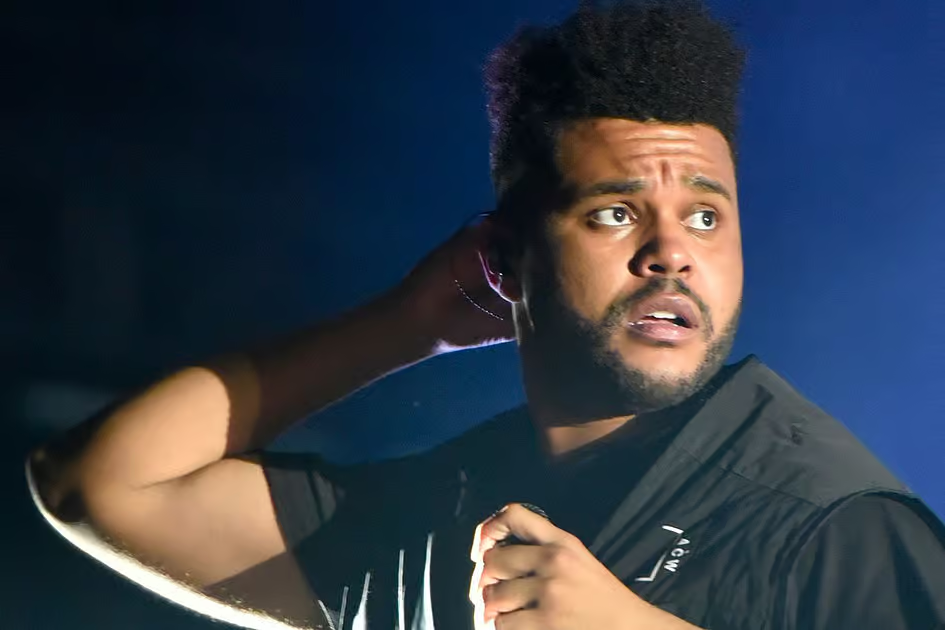
The Weeknd
The Weeknd remains one of the most glaring recent examples of this institutional friction. After being entirely shut out in 2021 following a record-breaking year, he declared a permanent boycott of the Grammys, calling the process inherently corrupt due to its reliance on secret committees.
Drake
Similarly, Drake has repeatedly distanced himself from the Grammys, going so far as to request that the Academy pull his already-nominated work from the ballot. His friction with the institution usually centres on the deep disconnect between true cultural impact and arbitrary award wins, especially when the Academy fails to understand genre dynamics or reflect what fans are actually listening to.
Drake
Frank Ocean
Frank Ocean took a similar stance when he withheld his critically acclaimed album Blonde from consideration, a move widely viewed as a direct rejection of the Academy’s history with Black artists and a refusal to let a board of voters define his artistic legitimacy.
Sinéad O’Connor
Beyond those who boycott the submission process, a group of artists has also chosen to walk away from the actual ceremony as well. Sinéad O’Connor famously refused her Grammy win in the early 1990s, taking a stand against the music industry’s commercialism and “false and destructive” values.
Will Smith
Decades earlier, Will Smith led a boycott of the 1989 ceremony when the newly created rap category was excluded from the main broadcast, using his absence to deliver a high-profile wake-up call about how mainstream institutions sidelined hip-hop.
Will Smith
And as BTS steps back from the Grammys race, they further reinforce a growing truth in the modern music landscape. The real power no longer rests solely with the Academy, when the world’s biggest artists are increasingly comfortable letting the music speak for itself.
Source: Khaleej Times