

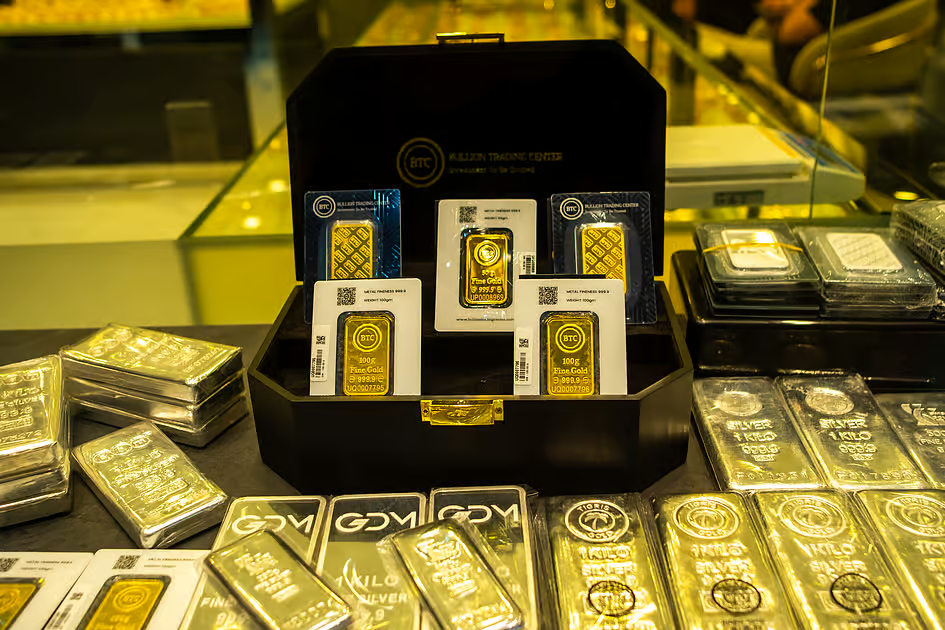
Gold prices rose to their highest level in almost seven weeks on Wednesday and were on track to post the biggest daily growth since February due to lower Treasury yields and hopes for progress on opening the Strait of Hormuz.
Spot gold climbed 4.4% to $4,256.85 per ounce by 1504 GMT, having hit $4,258.99, its highest since June 18, and broken above the 50-day moving average, which now supports it at $4,160.
U.S. gold futures for December delivery rose 4% to $4,317.40.
“The early adopters are getting back into precious metals as the likelihood of rate hikes has fallen since last week. The dollar has fallen sharply which helps. The Iran ‘pause’ helps as well,” said Tai Wong, an independent metals trader.
The dollar traded near six-week lows against major currencies, while yield on U.S. 10-year notes hovered near one-week lows after President Donald Trump said his administration had “very good discussions” with Iran during all-day negotiations, fuelling hopes the five-month conflict could be nearing.
However, gold is still down 24% since hitting a record high of $5,595 in January and down 19% since the start of the Iran war fuelled concerns about energy inflation and reinforced bets on interest rate hikes.
Demand for gold from central banks in first half of 2026 was the lowest since 2022, according to the World Gold Council. Outflows from gold-backed exchange-traded funds totalled 45 tons in the second quarter, when bullion posted its sharpest quarterly decline since 2013, falling 14%.
With central bank buying muted, retail interest focused elsewhere and subdued physical demand in Asia, rates-sensitive ETF demand is back as the marginal flow back in the driver’s seat for gold prices, J.P.Morgan said in a note.
“For the metals complex to gain real steam requires rate cuts to be priced in but, for now, that’s a 2027 story, at the earliest,” Wong said.
Spot silver rose 4.9% to $62.44 per ounce, after hitting its highest level since July 6.
Platinum steadied at $1,735.28 and palladium climbed 1.6% to $1,374.75. They hit highest since June 17 and June 2, respectively, on the Iran peace talks.
“Platinum and palladium have priced in numerous headwinds since the start of the conflict ranging from concerns over slowing auto production, growing market share of EVs and scope for growth in recycling,” said Suki Cooper at Standard Chartered.
She expects platinum to be undersupplied this year and palladium to tilt into a surplus in 2026.
Source: Khaleej Times