

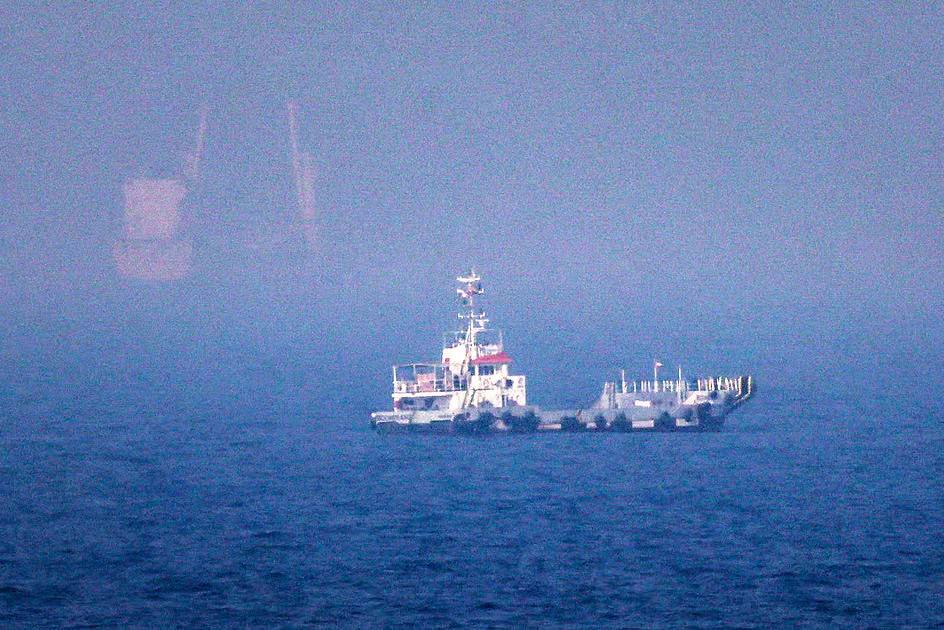
The UAE has already begun implementing its “zero-Strait-of-Hormuz” strategy, with shipping lines mainly reliant on the country’s east coast, said a spokesperson at the Ministry of Foreign Affairs.
Since the advent of the regional conflict, Iran has targeted oil tankers in the narrow waterway as a response to attacks by the United States and Israel. The UAE has managed to bypass these shipping constraints by turning to its east coast, in Fujairah and Khorfakkan, to decrease its reliance on the Strait.
Abdulla Balalaa, the Assistant Minister for Energy and Sustainability at the Ministry of Foreign Affairs (Mofa), said that the country’s energy mix is already quite diversified, including a 5.6 gigawatt combined nuclear power capacity in its Barakah Nuclear Energy Plant, which supplies 25 per cent of the UAE’s electricity needs.
Stay up to date with the latest news. Follow KT on WhatsApp Channels.
“In terms of shipments, the UAE has adopted a strategy of zero-Strait of Hormuz. The east coast of the UAE towards the Gulf of Oman is operational, and we’ve been already shipping from there,” he told Khaleej Times.
Speaking on the sidelines of the Water, Energy, Technology, and Environment Exhibition (Wetex), Balalaa said that the UAE is one of the main contributors of an intra-Gulf energy network, which protects and strengthens regional energy security.
Third UN Water Conference in 50 years
The UAE, in conjunction with Senegal, will co-host the first United Nations Water Conference in the Global South, and only the third since its inception almost 50 years ago. The event will take place from December 8-10 in Abu Dhabi, and will convene world leaders, policymakers, the private sector and other stakeholders to advance international water security.
“The UAE will play its role and will do the needful in order to contribute to the global water agenda,” Balalaa noted. He said he expects the conference to bring global leaders together to address the financing gap that remains from water insecurity.
The world has made significant progress with advancing water goals, although a staggering 2.1 billion people lack access to safely managed drinking water and 3.4 billion people don’t have access to safely managed sanitation systems, according to the UN. The financing gap remains close to $6.7 trillion, the Assistant Minister said.
Source: Khaleej Times