

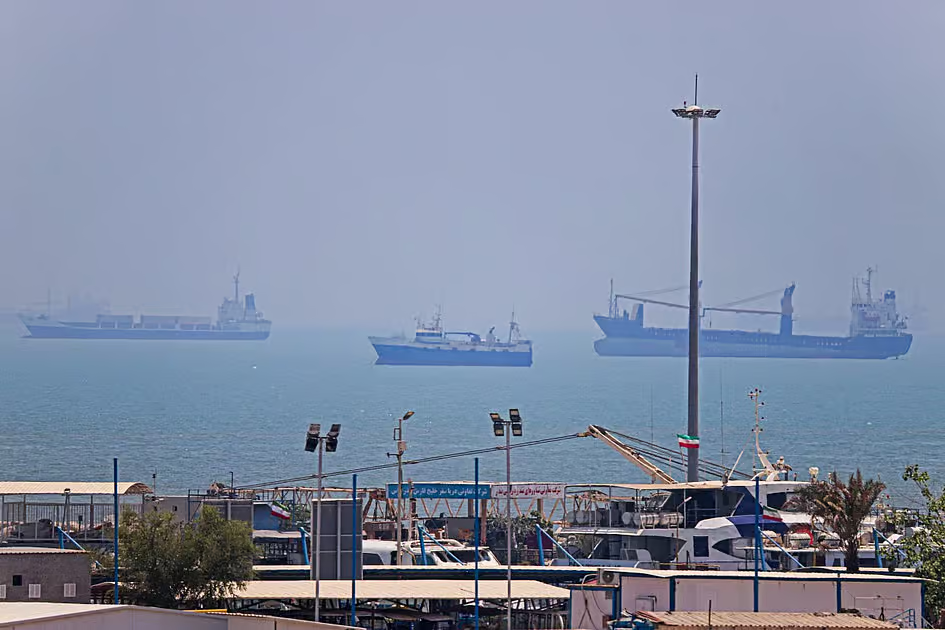
The UAE and Gulf freight charges have risen as much as tenfold since the Strait of Hormuz was closed following the US-Israel-Iran war, and rates are expected to increase by another 25 per cent in the next few months due to container shortages and disruptions caused by the closure of Hormuz, according to top traders and importers.
Anis Sajan, vice chairman of Danube Group, said a shipment that once cost $1,000 now costs $10,000-$12,000 and could reach $15,000 in the coming months. He said the closure of Hormuz has also caused a shortage of containers from China, Italy and other countries.
Stay up to date with the latest news. Follow KT on WhatsApp Channels.
“Goods that used to take 25 days to reach the UAE and the region now take 60 days, and sometimes 90 days. A war surcharge has been added on top,” he said, adding that rates have not fallen in the six months since the Hormuz closure.
Speaking on the sidelines of Dubai Milano Traders Meet held in Dubai, Sajan said many projects launched recently need raw materials, so developers and manufacturers must complete them regardless of higher prices. He said companies that import now stand to benefit from demand in the months ahead.
He added that his home-furnishing company, Casa Milano, grew 20 per cent year-on-year despite the conflict, while Danube Building Materials also recorded growth.
Supply chain routes have been disrupted after US-Israel-Iran war broke out on February 28, 2026, impacting flow of goods and energy vessels through the Strait of Hormuz.
Azhar Sajan, director of Casa Milano, said freight that once cost $1,000-$2,000 rose to $6,000 and is now $10,000-$12,000. “Lead times have stretched from about 30 days to at least 60, and possibly 70. Brass prices are up 30 per cent on pre-conflict levels, raising landed costs.”
To offset this, the company is expanding exports. It now supplies 10 to 12 countries in Africa, including Ethiopia, Sudan and Somalia, as well as Georgia. Buying directly from China has opened up new options for export customers, he said. Exports have risen from about 10 per cent of the business in 2020 to 30-35 per cent.
He said the ports of Khorfakkan and Fujairah have been very useful amid the regional challenges.
Rates to stay elevated
Masna Haseen, director of marketing and growth at tradeX Link, said that for 40-foot high-cube containers, rates have moved from about $2,000 before the disruption to indicative quotes of $7,000-$11,000, an increase of 250 to 450 per cent. “Across ten containers, that adds $50,000 to $90,000. Spread over 1,000 saleable units per container, it adds $5 to $9 to each item.”
Haseen said rates are likely to stay elevated on disrupted Gulf-bound services into the fourth quarter.
She projected a further 5-15 per cent rise during peak weeks compared with September quotations if fuel and capacity pressures persist. “On a $9,000 booking, that would mean $9,450 to $10,350. It is a judgment-based estimate, not a measured global average.”
She advised importers and traders to check factory reopening dates after China’s Mid-Autumn holiday (September 25-27) and National Day break (October 1-7). Missed sailings could put Christmas and year-end deliveries at risk. “It is complete when the goods can be sold, installed or put to work,” she said of a shipment.
If the conflict ends now, Azhar Sajan sees recovery to pre-war levels taking just a few months because the local economy and business community are very resilient.
Source: Khaleej Times